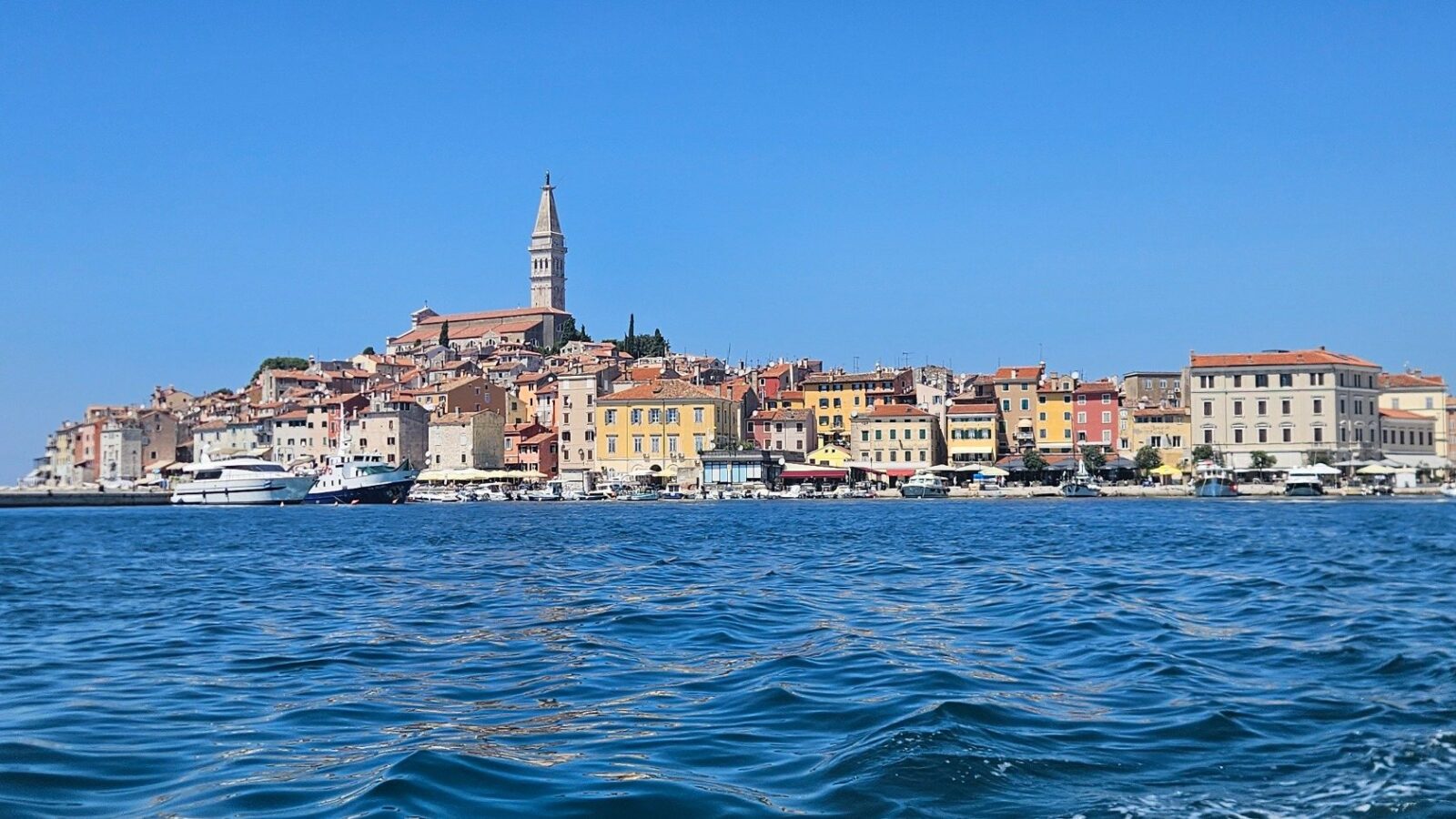
Rovinj is one of those places that makes more sense once you stop trying to see everything at once. The historic centre rises from the sea, narrow stone streets lead uphill toward St. Euphemia, small boats still line the harbour, and the coastline quickly opens into pine forests, rocky coves and islands.
This is the starting point for discovering Rovinj. Whether you are visiting for a weekend, spending a week in Istria, or using the town as a base for exploring the peninsula, Rovinj combines a compact historic centre with beaches, nature, local food and a strong maritime identity.
What makes Rovinj special?
Rovinj’s historic core developed on a coastal islet and was connected to the mainland in 1763 when the channel was filled. The medieval street pattern is still visible today, with narrow lanes, small squares, stone houses and steep passages leading toward the church of St. Euphemia.
The town is also closely connected to the sea. Traditional wooden batana boats, fishing traditions, local songs and the waterfront are part of Rovinj’s cultural identity. The Batana House Ecomuseum preserves this heritage and was included in UNESCO’s Register of Good Safeguarding Practices for intangible cultural heritage in 2016.
Start in Rovinj Old Town
The best way to experience Rovinj is on foot. Leave the main road behind and enter the historic centre, where the streets become narrower and the architecture changes from modern coastal town to a distinctly Venetian-influenced Mediterranean town.
Walk through the Balbi Arch, continue toward Grisia Street and allow yourself time to explore the smaller lanes rather than following a strict route. The harbour promenade is an easy place to pause, while the higher parts of the old town provide views across the rooftops and the sea.
Rovinj’s Old Town is a pedestrian environment, so comfortable shoes are more useful than trying to plan the visit around a car. Limestone can also become slippery when wet.
Visit St. Euphemia Church
At the highest point of the historic centre stands the Church of St. Euphemia, one of Rovinj’s defining landmarks. The church dominates the skyline and the square in front of it is one of the most rewarding viewpoints in the old town.
Inside, the church is closely associated with St. Euphemia, the patron saint of Rovinj. The story of the saint and the sarcophagus that, according to local tradition, arrived by sea is deeply connected with the identity of the town.
If the bell tower is open during your visit, the climb provides a broad view over Rovinj, the surrounding coastline and the nearby islands. Check current opening arrangements locally before planning the climb because access can vary by season.
Explore the Rovinj waterfront
After walking through the old town, return toward the harbour. The waterfront gives you a completely different perspective of Rovinj: instead of looking down narrow streets, you see the historic buildings rising directly above the water.
This is also where Rovinj’s connection with fishing and traditional boats becomes particularly visible. The small harbour, working boats and waterfront restaurants are part of the everyday character of the town, not just a backdrop for photographs.
Discover Rovinj’s batana tradition
The batana is a traditional wooden fishing boat with a flat bottom and has become one of the symbols of Rovinj. The Batana House Ecomuseum explains the boat’s construction, the lives of local fishermen and the wider cultural traditions connected with the sea.
For visitors interested in local culture, this is one of the places that adds context to what you see around the harbour. Rovinj is more than a historic postcard: its maritime traditions are still an important part of the town’s identity.
Go beyond the Old Town: Golden Cape Forest Park
One of the advantages of visiting Rovinj is how quickly the urban centre gives way to nature. Golden Cape Forest Park, known locally as Zlatni rt, is south of the historic centre and is one of the town’s best areas for walking, cycling and spending time by the sea.
The park combines woodland, paths, rocky coastline and small coves. It works particularly well if you want a break from sightseeing or prefer an active day outdoors rather than spending the entire day in the centre.
You can reach the area on foot or by bicycle from town. In summer, an early or late visit is often more comfortable than the hottest part of the afternoon.
Spend time by the sea
Rovinj is surrounded by a varied coastline rather than one single large beach. You will find rocky bathing areas, small coves, pebble sections and beaches close to the town, as well as quieter places farther along the coast.
Monte Beach is directly beside the Old Town, while areas around Lone Bay and Golden Cape offer more space and easier access to nature. Porton Biondi, north of the historic centre, is another practical option and has views back toward Rovinj’s skyline.
If swimming is the main purpose of your trip, explore more than one part of the coast. Conditions, shade, access and atmosphere differ considerably from one location to another.
What to eat in Rovinj
Rovinj’s food culture reflects its location between the Adriatic and the Istrian interior. Seafood is an obvious part of the local dining scene, but the wider region is also known for extra virgin olive oil, seasonal vegetables, Istrian pasta, truffles, local wines and traditional dishes.
For a more local experience, look beyond restaurants immediately beside the busiest waterfront areas. Small family-run restaurants and traditional taverns can offer a different atmosphere and a closer connection with Istrian cuisine.
How much time do you need in Rovinj?
One day in Rovinj
With one day, concentrate on the Old Town, St. Euphemia Church, the harbour and a walk along the waterfront. If time allows, continue toward Golden Cape in the late afternoon.
A weekend in Rovinj
Two days give you enough time to combine the historic centre with beaches, Golden Cape and a more relaxed evening in town. You can also spend time exploring local food and cultural attractions rather than rushing from one sight to another.
Three or more days
With more time, use Rovinj as a base for exploring the surrounding Istrian coast and inland towns. Pula, Bale, Kanfanar, Lim Bay, Vrsar and other destinations can be combined with a stay in Rovinj depending on your interests and transport.
When is the best time to visit Rovinj?
Rovinj works in different seasons for different reasons. Summer is the busiest period and is ideal if swimming and long days by the sea are your priorities. Late spring and early autumn are particularly suitable for walking, cycling, sightseeing and combining town visits with outdoor activities.
September can be especially interesting because the sea is still suitable for swimming while the atmosphere begins to change after the peak summer period. Autumn and winter offer a quieter view of the town, although some seasonal businesses and attractions operate on reduced schedules.
Practical tips for your first visit
- Explore on foot: the Old Town is compact, but the streets can be steep and uneven.
- Plan parking before arrival: do not expect to drive into the historic centre.
- Bring comfortable shoes: stone streets and steps are part of the experience.
- Carry swimwear: you can move from sightseeing to a swim surprisingly quickly.
- Allow time without a plan: some of Rovinj’s best moments come from wandering rather than checking off attractions.
- Check seasonal opening hours: museums, towers, boat services and other attractions can change their schedules during the year.
Is Rovinj worth visiting?
Rovinj is a destination where the historic centre, coastline and nature are close enough to experience in the same day. Its appeal comes from that combination: you can walk through a medieval street in the morning, swim in the Adriatic, cycle through a forest park and finish the day with seafood or an Istrian wine.
For a first visit, start slowly. Explore the Old Town, climb toward St. Euphemia, walk down to the harbour and then follow the coast beyond the centre. Once you have seen Rovinj from those different perspectives, it becomes much easier to decide which beaches, restaurants, excursions and experiences deserve more of your time.
Plan your Rovinj stay
Rovinj is easiest to enjoy when you choose accommodation that matches the way you want to experience the town. Staying close to the Old Town is convenient for sightseeing and evenings in the centre, while properties farther from the historic core can offer more space, parking and easier access to the beaches.
Use RovinjPoint as your starting point for discovering the town, then continue with our guides to Rovinj’s Old Town, beaches, parking, things to do, places to stay and practical travel information.