
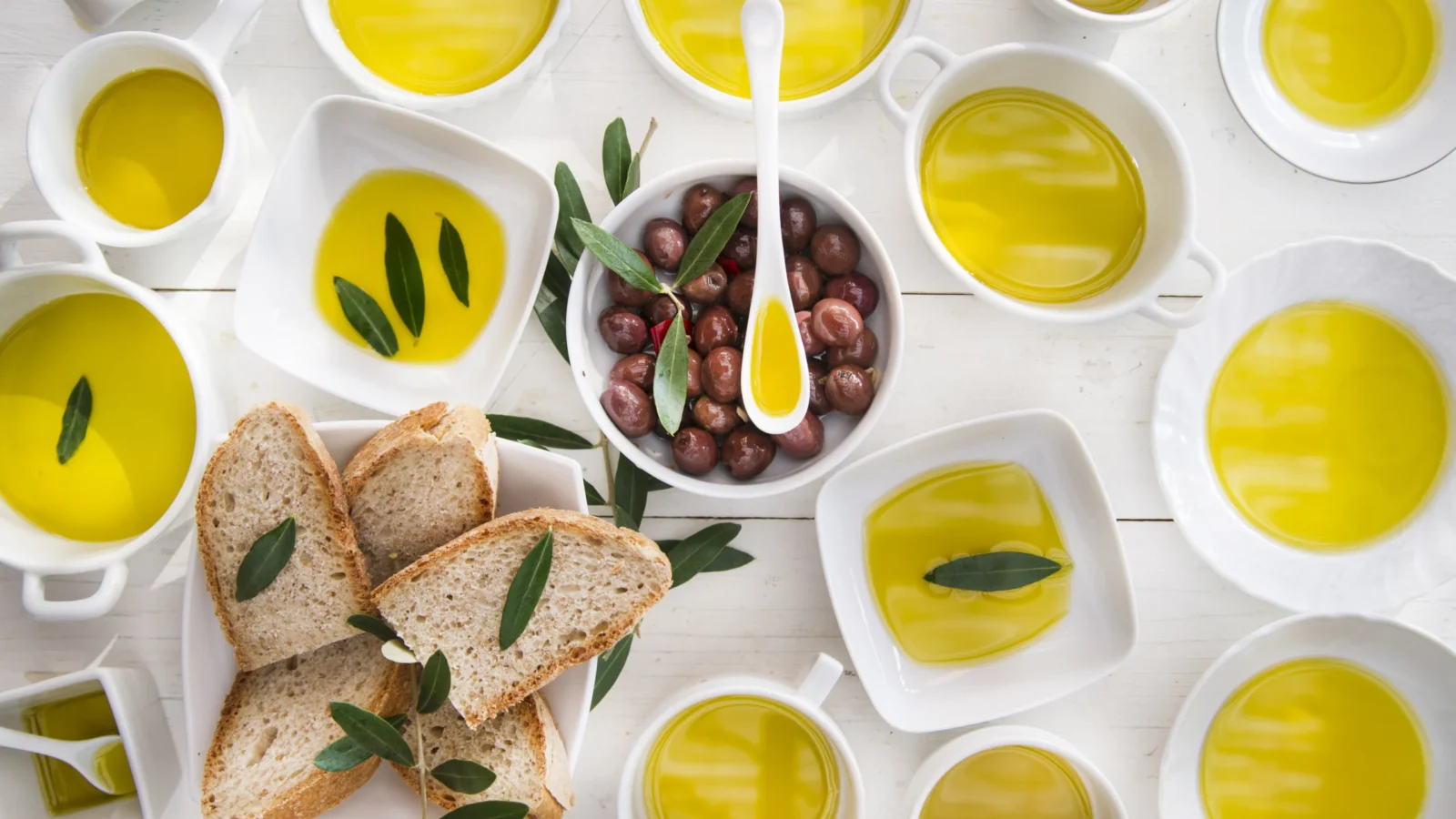
Rovinj is a good base for discovering two of Istria’s most characteristic products: wine and extra virgin olive oil. You do not need to drive deep into the peninsula to taste them properly. There are family producers on the edge of Rovinj itself, while several well-known estates are within an easy half-day drive.
The most useful approach is to choose one tasting rather than trying to visit many producers in a single day. A guided tasting gives you time to understand the difference between Malvazija, Teran and Muscat, learn how Istrian olive oil should taste, and enjoy local food without turning the experience into a rushed checklist.
Quick answer: what should you try?
- Malvazija Istarska – the signature white grape of Istria, usually fresh and dry, but also made in more structured styles.
- Teran – Istria’s distinctive red grape, known for freshness, acidity and darker fruit character.
- Muškat – aromatic Muscat, often enjoyed as a fragrant or sweeter style.
- Extra virgin olive oil – look for fresh bitterness and peppery pungency rather than a neutral taste.
For a wider introduction to the region’s food, see What to Eat in Rovinj.
Wine tasting in and around Rovinj
Mare Wines & Olive Oil
Mare Wines & Olive Oil is one of the easiest places to experience both products without leaving Rovinj. Its tasting room is at Stanjera 5A, among vineyards and olive trees. The family produces Malvazija, Teran, Muscat and extra virgin olive oil.
As of September 2026, the winery lists a 40-minute tasting of three wines plus olive oil and local products for €25, and a 60-minute premium tasting of five wines plus olive oil and local products for €30. The winery asks visitors to reserve and notes that same-day requests should be made by phone. It also currently states that Sunday is closed and payment is cash only. Prices and conditions can change, so check the producer’s own booking page before going.
Stancija Collis
Stancija Collis, at Sarižol 11 near Rovinj, combines vineyards and olive groves on a rural estate. The official Istria tourism listing records organically certified production, around 500 olive trees and a tasting room, with wine among the estate’s own products.
This is a good option if you want a countryside setting close to town rather than a wine bar in the centre. Arrange your visit directly, especially outside the main summer season.
Other local producers
Rovinj and the surrounding countryside have several small family wineries and olive growers. Opening arrangements can be informal and seasonal, and some producers receive visitors only by appointment. That is why it is better to contact a producer before setting off than to rely on map opening hours alone.
Nearby wineries worth combining with a drive
San Tommaso near Bale
San Tommaso is in Golaš near Bale, roughly 15 km from Rovinj. The estate focuses strongly on Malvazija Istarska, with Teran, Merlot, Chardonnay, Cabernet Sauvignon and white Muscat also represented. It works well as part of a half-day route that includes Bale or the countryside toward the Lim Channel.
If you plan to explore producers outside town, visiting Rovinj by car explains parking and driving considerations for the wider area.
Olive oil tasting: what to expect
A proper olive oil tasting is different from simply dipping bread into oil. Good producers usually explain the harvest, milling process and local olive varieties, then guide you through aroma, bitterness and pungency.
Fresh high-quality extra virgin olive oil may smell of cut grass, herbs, tomato leaf, artichoke or green almond. A bitter edge and peppery sensation in the throat are usually positive signs in fresh oil, not defects.
Istria has several traditional local olive varieties, including Buža and Istarska bjelica. Producers often make both single-variety oils and blends, which makes a tasting useful if you want to understand the difference rather than simply buy a bottle.
Chiavalon in Vodnjan
If olive oil is the main purpose of your outing, Chiavalon in Vodnjan is one of the region’s established tasting destinations. Its current visitor programme includes a walk through the olive grove, an introduction to modern oil production, a mill visit and guided tasting. Some programmes also include local snacks and Istrian Malvasia.
At the time of this September 2026 update, Chiavalon asks visitors to submit booking requests in advance and does not accept online same-day bookings. The estate is outside Vodnjan, so it is much easier to reach by car or taxi than by trying to build the day around public transport.
Chiavalon also currently has a concept store at Hotel Lone in Rovinj, useful if you want to buy oil in town without travelling to the mill.
Wine bars in Rovinj versus winery visits
If you do not have a car, a wine bar in the Old Town or harbour area is the simplest way to try Istrian labels. A good wine bar can introduce you to several producers in one sitting, while a winery visit gives you more context about the vineyard, family and production.
Neither is automatically better. Choose a wine bar for flexibility and an evening drink; choose a winery for a slower, more educational experience. For evening options, see Bars & Cafés in Rovinj.
How to plan a tasting from Rovinj
- Book ahead. Small producers may not keep regular walk-in hours, especially outside July and August.
- Confirm the language. English is widely used in tourism, but guided tastings in German, Italian or another language may need advance arrangement.
- Ask what is included. Some tastings include cheese, prosciutto, bread or olive oil; others focus only on wine.
- Do not overbook. One substantial tasting plus a village, lunch or short walk usually makes a better half-day than three rushed appointments.
- Plan transport before tasting. If everyone in the group wants to drink, use a taxi or organised excursion rather than assigning the driving decision afterward.
A practical half-day wine and olive oil route
For a low-effort experience, stay close to Rovinj and book one of the producers around the town’s outskirts. Allow about two to three hours including travel and a relaxed tasting.
With a car, a good half-day structure is Rovinj → Bale/Golaš for a winery → a short stop in Bale → return to Rovinj. Another option is Rovinj → Vodnjan for an olive-oil-focused visit → a short walk through Vodnjan → return via the coast. Avoid trying to combine both routes unless you have a full day.
Best time of year
Wine and olive oil are year-round products, but the atmosphere changes by season. Summer has the widest visitor offer but also the most traffic and heat. May, June, September and early October are especially comfortable for combining a tasting with sightseeing.
Harvest periods are interesting but busy for producers. Grape harvest normally occupies late summer and early autumn, while olive harvest comes later in autumn. Do not assume that harvest season means more walk-in access: it can mean exactly the opposite, because the family is working.
Winter can be excellent for a quiet tasting, but advance arrangements matter more because many tourism-oriented businesses reduce hours.
Rovinj’s wine traditions and events
Wine is not only a rural day-trip activity. Rovinj has its own long connection with the spacio, the traditional local tavern or wine cellar. The official Istria tourism portal still highlights this part of Rovinj’s cultural identity.
In 2026, the official Rovinj Wine Festival was held on 13 September during the St. Euphemia celebrations, focusing on Istrian wines and especially Malvazija and Teran. Event dates change each year, so future visitors should check the current Rovinj or Istria events calendar rather than relying on an old date.
Buying wine and olive oil to take home
Buying directly from a producer is useful because you can taste before choosing and ask how the product should be stored. For olive oil, favour dark glass or tins and keep the bottle away from heat and direct light. For wine, ask whether the bottle needs cool storage during your onward journey.
If you are flying, remember that normal airport security rules limit liquids in hand luggage. Checked baggage or producer shipping may be more practical for multiple bottles. If you are travelling internationally, check the customs allowance for your destination before buying a case.
Is a tasting worth it?
Yes, if you are interested in food and want more than a restaurant meal. A tasting explains why Malvazija and Teran matter in Istria, how olive oil quality is judged, and how agriculture shapes the landscape just outside Rovinj.
For most visitors, one well-chosen tasting is enough. Keep the rest of the day flexible, eat something substantial, and treat the experience as part of understanding Istria rather than as a race through labels and producers.
Last updated: September 2026