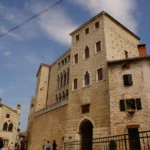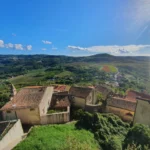
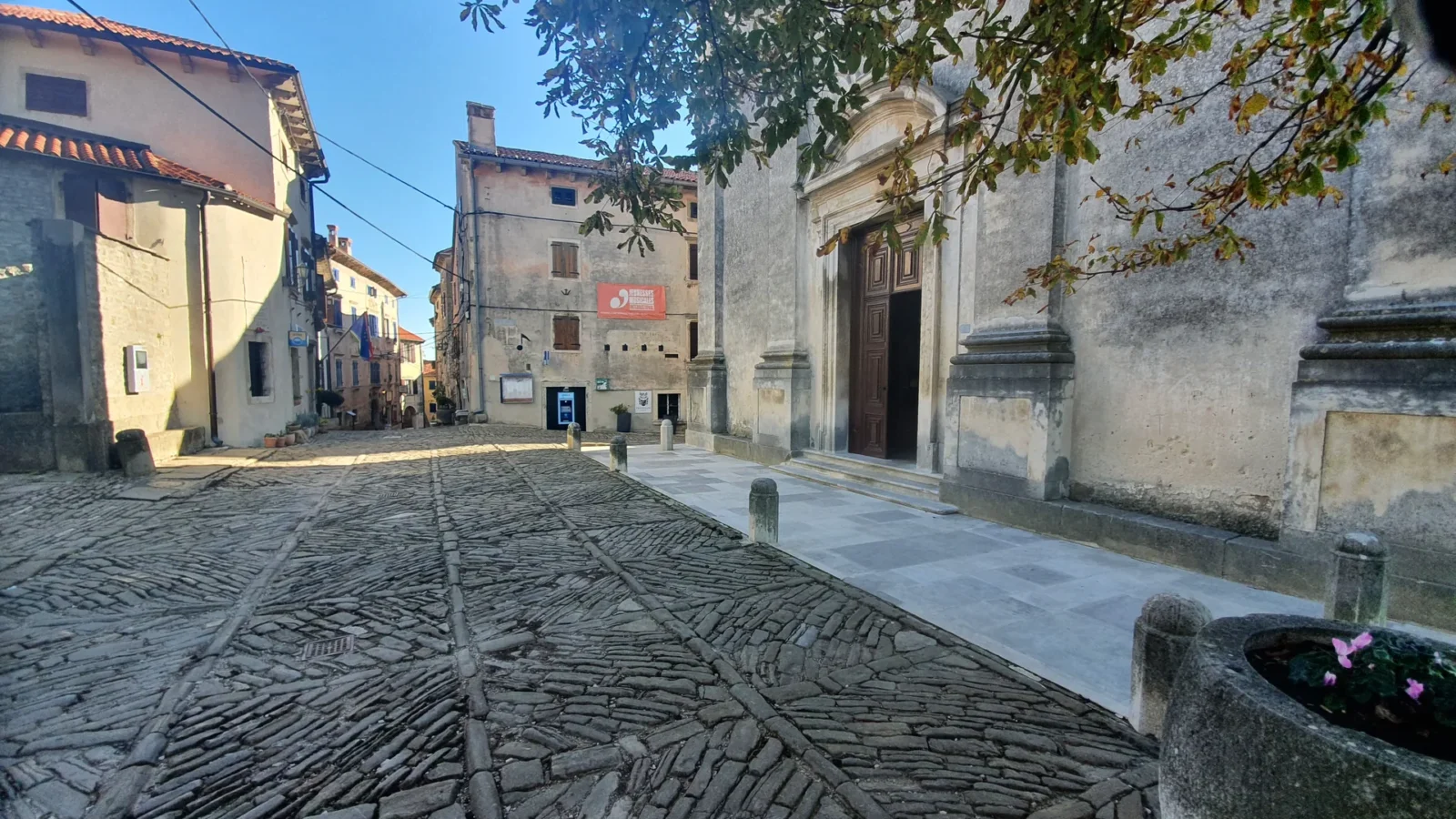
Grožnjan is one of the easiest ways to add northern Istria to a stay in Rovinj without turning the day into a long road trip. The small hilltop town is known for art galleries, music, stone lanes and wide views over the Mirna valley, and its compact historic centre makes it especially suitable for a relaxed half-day visit.
The main practical difference from a coastal excursion is transport. Grožnjan is much easier by car than by public transport, and visitors leave their vehicles outside the historic core before continuing on foot. If you want to see a distinctly inland side of Istria while still returning to Rovinj for dinner, this is a strong choice.
Is Grožnjan worth a day trip from Rovinj?
Yes, particularly if you enjoy small historic towns, galleries, photography, local food and slow sightseeing. Grožnjan does not have a long checklist of major monuments. Its appeal is the combination of preserved stone streets, artists’ studios, small squares, viewpoints and the feeling that the old town is still used as a cultural place rather than simply displayed as a museum.
The official Istria tourism portal describes Grožnjan as a town of artists whose streets become especially active with music, workshops and cultural programmes in the warmer months. That seasonal atmosphere is part of the attraction, but the town is also enjoyable outside the busiest summer period when it is quieter.
How to get from Rovinj to Grožnjan
By car
Driving is the most practical option. The road journey is roughly an hour, depending on route and traffic, so Grožnjan works well as either a half-day trip or part of a full inland-Istria day. If you are already considering several excursions, our Rovinj by car guide explains why having a vehicle is most useful for places like this rather than for central Rovinj itself.
The final approach climbs into hilly country. Roads are generally straightforward, but the last section is slower than the main coastal routes and can feel narrow in places. In high season, arriving earlier in the day usually makes parking and walking through the old town more comfortable.
Without a car
Grožnjan is not one of the easiest independent public-transport day trips from Rovinj. Direct same-day connections are limited compared with places such as Pula, and timetables may not line up well with sightseeing. If you are staying in Rovinj without a car, a pre-arranged taxi, transfer, organised excursion or one-day car rental is normally more practical than building the day around several bus connections.
If you still want to use public transport, check the exact timetable for your travel date before leaving Rovinj and plan the return first. Rural services can change seasonally, and the most important question is whether the return departure gives you enough time in town.
Parking in Grožnjan in 2026
Visitors should not plan to drive through the medieval centre. The old core is a pedestrian zone, and the municipality’s traffic notice for Grožnjan explains that ordinary visitor vehicles remain outside the barrier protecting the historic centre.
For 2026, the municipality lists several public parking areas around the approach to the old town and the cemetery. According to the official 2026 parking price list, cars and motorcycles cost €1.50 per hour or €20 per day from 1 April to 31 October, and €1 per hour or €15 per day from 1 November to 31 March. Charging applies all day, and payment options include parking meters, SMS, Bmove and an automatic cashier where available.
For a normal sightseeing visit, follow the signed visitor parking rather than trying to get as close as possible to the old gate. The walk from the parking areas is short enough for most visitors, but the surface is uneven and includes slopes.
What to see in Grožnjan
The old town lanes and artists’ studios
The best introduction is simply to walk slowly through the stone lanes. Grožnjan’s artistic identity developed strongly in the second half of the 20th century, and today small galleries and studios remain a defining part of the town. Some are highly seasonal, so do not expect every door to be open outside summer or on quiet weekdays.
Instead of trying to follow a rigid route, allow time to look into galleries that are open, stop in small courtyards and notice the hand-painted signs, old façades and views that appear between buildings.
Town gate and Renaissance loggia
The historic entrance and town loggia are among the clearest reminders of Grožnjan’s Venetian-era past. The Renaissance loggia dates from 1587 and once served an administrative and judicial role. It is a useful orientation point because several of the old town’s lanes branch from this area.
Parish Church of Sts. Vitus, Modestus and Crescentius
The parish church dominates the centre of the hilltop settlement. Even when you do not enter, the church square and surrounding lanes are worth including in your walk. Opening access can depend on services, events and the season, so treat the interior as a bonus rather than building a tight schedule around it.
Fonticus City Gallery
Fonticus is one of the better-known cultural spaces in Grožnjan and regularly hosts exhibitions. Programmes and opening times change, so if a gallery visit is important to you, check the current schedule before travelling rather than assuming fixed museum-style hours.
Views over the Mirna valley
Grožnjan sits high above the surrounding landscape, and the views are one of the main reasons to linger. Look for open edges of the old town where the landscape drops toward vineyards, olive groves and the Mirna valley. Morning light is often softer for photography, while late afternoon can be especially attractive outside midsummer heat.
Small museums by arrangement
The Museum of Folk Instruments and Archaeological Museum Sv. Križ are not conventional drop-in museums with long daily hours. The official Istria museum listing currently states that visits are free and available by prior arrangement. If this interests you, contact the local tourist office before your trip.
A practical half-day itinerary from Rovinj
Morning: drive inland and park outside the old town
Leave Rovinj after breakfast and aim to reach Grožnjan before the warmest part of the day. Park in the signed visitor area and walk through the historic gate rather than rushing immediately toward a specific sight.
Late morning: lanes, galleries and viewpoints
Spend the first hour or two exploring the centre slowly. Visit the loggia, church square and whichever galleries are open, then follow side streets toward viewpoints over the countryside.
Lunch: keep it local and unhurried
A simple Istrian lunch suits Grožnjan better than a rushed stop. Look for local pasta such as fuži or pljukanci, seasonal truffle dishes, prosciutto, cheese and regional wines such as Malvazija or Teran. Menus can change significantly between peak summer and quieter months, so choose what is actually fresh and available rather than arriving with one specific dish in mind.
Early afternoon: coffee, one final gallery and return
After lunch, allow time for coffee, a final viewpoint or another gallery before returning to Rovinj. This leaves the evening free and avoids turning a small town into an exhausting full-day checklist.
Combining Grožnjan with Motovun
If you have a car and want a full inland-Istria day, Grožnjan and Motovun work well together because they offer different experiences: Grožnjan is smaller and art-focused, while Motovun is more strongly defined by its fortified hilltop setting, walls and truffle country. Our Motovun day trip from Rovinj has the practical details for the second stop.
Do not try to combine too many hill towns in one day. Two well-paced stops are usually more rewarding than spending the day parking, driving and checking the time.
Grožnjan with children
Families can enjoy Grožnjan because the centre is compact and there are frequent visual details rather than long indoor visits. The main challenge is the paving. Cobbles, slopes and occasional steps can be awkward with a heavy stroller, so a lighter stroller or baby carrier is more practical for very young children.
There are also places where streets and viewpoints open toward steep terrain. Keep younger children close near walls and edges, especially when the town is busy.
Accessibility and reduced mobility
The historic fabric makes Grožnjan challenging for visitors with reduced mobility. Parking is outside the pedestrian core, surfaces are uneven and some routes involve slopes or steps. If mobility is a major concern, contact the tourist office in advance and ask which parking area and entrance give the easiest approach on the day of your visit.
Best time to visit
Late spring and early autumn are excellent for walking because temperatures are generally more comfortable than in midsummer. July and August bring the liveliest cultural atmosphere, but they can also mean more visitors, hotter stone streets and greater pressure on parking.
September is particularly appealing because the heat is usually less intense while galleries and events may still be active. In winter and early spring, Grožnjan can be very quiet and some galleries, cafés and visitor services may be closed, so visit for the architecture and atmosphere rather than expecting a full cultural programme.
What to bring
- comfortable shoes with good grip for polished and uneven stone
- water, especially from late spring to early autumn
- sun protection in summer
- a light extra layer outside midsummer because hilltop conditions can feel cooler
- a small umbrella or rain jacket if showers are forecast
How long do you need in Grožnjan?
Two to three hours is enough for a first walk through the old town, a few galleries and the main viewpoints. Three to five hours is better if you want lunch, coffee and a slower look at the cultural side of the town. A full day only makes sense if you combine Grožnjan with another inland destination, a winery, a longer meal or part of the Parenzana route.
For most Rovinj visitors, the best version is a relaxed half-day: drive up, wander without rushing, eat something local and return before the trip starts to feel overplanned.
Last updated: September 2026