Last updated: September 2026
Rovinj is one of the easier places in Istria to enjoy without a car. If you stay near the Old Town, harbour or wider town centre, most of the places visitors use every day are reachable on foot, while bicycles, seasonal local buses, taxis and boats cover many of the journeys that are too far to walk comfortably.
The main limitation is not Rovinj itself but exploring inland Istria. Coastal sights, beaches, islands and central Rovinj are straightforward without a car; hill towns, wineries and remote countryside are much less convenient unless you join an excursion, take a taxi or rent a car for a day.
Quick answer: do you need a car in Rovinj?
No, not for a typical stay focused on Rovinj. A car is unnecessary for the Old Town, harbour, restaurants, central beaches, Golden Cape and most everyday sightseeing. In summer, Rovinj also operates seasonal local bus lines connecting the centre with areas such as Borik, Amarin, Valalta, Polari, Villas Rubin, Centener, Veštar and Kokaleto.
A car becomes useful if your priority is exploring rural Istria at your own pace, visiting several hill towns in one day, reaching isolated beaches, or staying well outside the urban area.
Walking is the main way to get around Rovinj
Central Rovinj is compact. The harbour, main square, Old Town, markets, restaurants and much of the waterfront are naturally linked by walking routes. For many visitors, the simplest plan is to choose accommodation in or close to the centre and treat walking as the default transport.
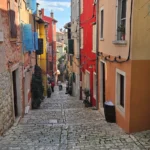
The Old Town needs a little more planning. Its polished stone lanes can be steep, uneven and slippery when wet. There are also steps and narrow passages, so rolling large suitcases through the historic core can be awkward. If your accommodation is deep inside the Old Town, ask in advance where a taxi or transfer can drop you and whether luggage assistance is available.
Families with strollers can still enjoy Rovinj, but the flattest routes are around the harbour and waterfront. Reaching the upper Old Town and St. Euphemia usually involves steeper cobbled streets.
Read more: Rovinj Old Town
Seasonal local buses: useful for beaches and outer areas
Rovinj does have local bus transport, but it is primarily seasonal. The City of Rovinj-Rovigno currently states that municipal local lines operate from 1 June to 1 October. Four routes connect central stops around Trg na Lokvi and the waterfront with several accommodation and beach areas:
- Line 1: Amarin, Borik and the hospital area to central Rovinj.
- Line 2: Valalta and Valsaline to the centre.
- Line 3: Polari, Villas Rubin and Centener to Trg na Lokvi.
- Line 4: Veštar, Kokaleto and Monfiorenzo to Trg na Lokvi.
Timetables and fares can change, so check the current municipal schedule before relying on a specific departure. Outside the summer operating period, walking, cycling and taxis become more important.
Official current information: City of Rovinj-Rovigno local bus transport.
Intercity buses are important if you do not have a car
For trips beyond Rovinj, regular intercity buses are the most useful public transport option. Arriva currently lists Rovinj Bus Station at Trg na lokvi 6, less than 100 metres from the waterfront and under one kilometre from the Old Town. This central location is convenient if you stay in town.
The city is also developing a new bus terminal at Concetta, so travellers should always check the departure point shown on their ticket rather than relying on an older map or guide.
Pula is one of the easiest independent day trips by bus, with multiple daily services. Other destinations can work too, but same-day return times matter more than distance. Check the outbound and return schedule before committing to a day trip.
Current operator information: Arriva Rovinj–Pula route and Rovinj bus station.
Read more: How to Get to Rovinj
Cycling can replace many short car journeys
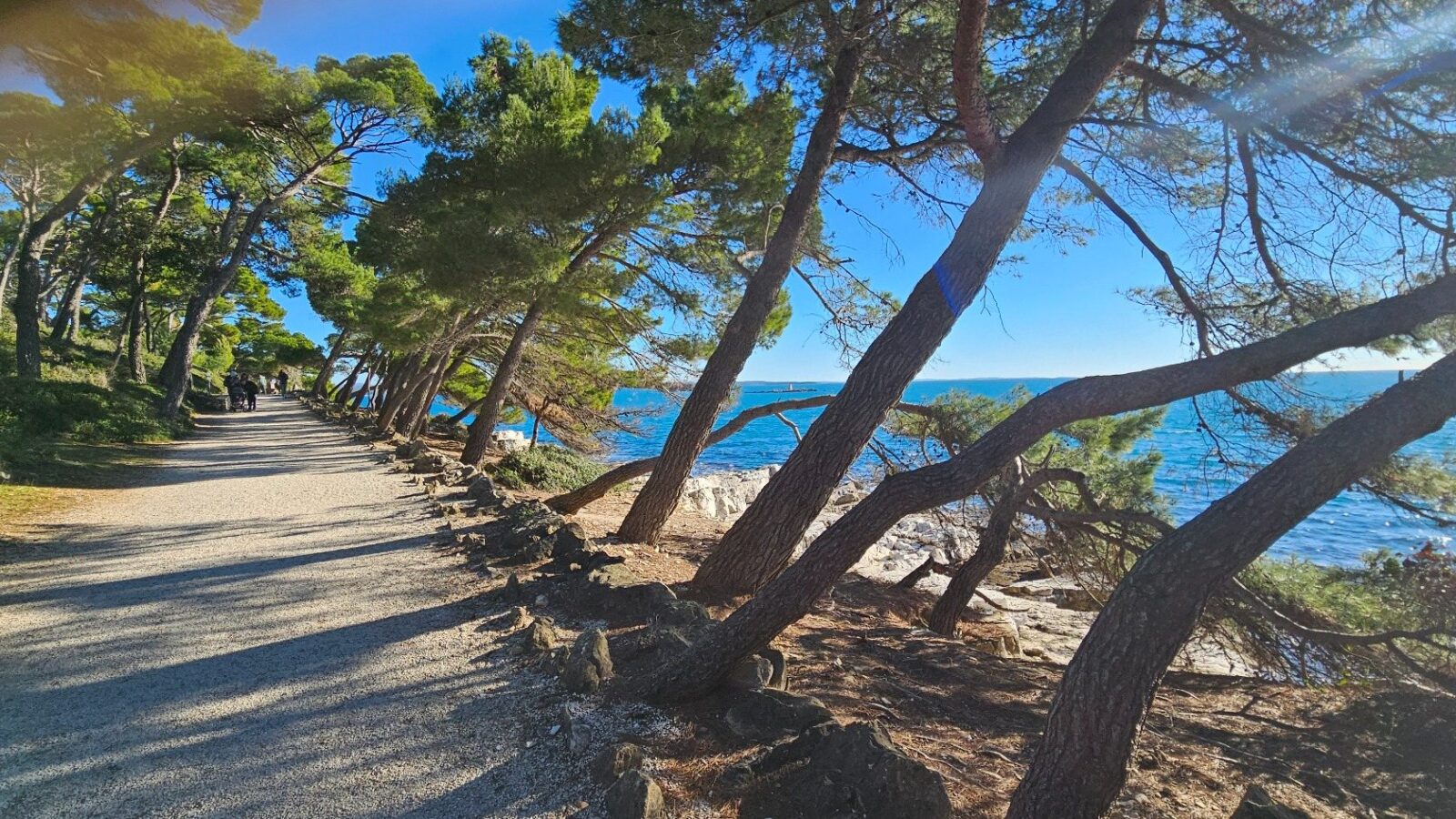
A bicycle is particularly useful if you want to combine the centre with Golden Cape, Cuvi, coastal paths and areas just outside the compact core. The official Istria tourism portal currently lists 15 cycling routes in the wider Rovinj area, most of them easy, with family and recreation routes designed to avoid heavy traffic and steep climbs where possible.
For casual visitors, the best use of a bike is often not a long sports ride but simple transport: centre to Golden Cape, a beach stop, a coastal ride and back. In July and August, start earlier in the morning or later in the afternoon because exposed sections can be hot.
If you rent a bicycle or e-bike, ask about a lock, lights, helmet and the exact return time. Do not assume every Old Town lane is suitable for cycling; walking the bike through crowded pedestrian areas is often the sensible choice.
Read more: Cycling in Rovinj
Beaches you can reach without a car
You do not need a car to swim every day in Rovinj. Your best beach depends on how far you want to walk or cycle.
- Old Town bathing spots: useful for a quick swim when sightseeing, with rocky access close to the historic centre.
- Mulini and Lone area: convenient from central Rovinj on foot along the waterfront.
- Golden Cape (Zlatni rt/Punta Corrente): one of the best car-free choices because walking and cycling are part of the experience.
- Cuvi: practical by bicycle and reachable on foot if you are comfortable with a longer walk.
- Borik and Amarin direction: easier in summer using the seasonal local bus, bicycle or taxi.
Bring water and suitable footwear for rocky sections. During the hottest part of summer, distance feels longer than it looks on a map.
Read more: Best Beaches in Rovinj
Read more: Parks in Rovinj
Islands are actually easier without a car
Rovinj’s nearby islands are reached by boat, so having a car offers no advantage once you are in town. Current Maistra schedules show frequent boat services from Rovinj to St. Catherine and St. Andrew/Red Island, with the St. Catherine crossing taking about five minutes and the St. Andrew crossing about 15 minutes.
These services are seasonal and operational details can change, so check the current timetable before departure. For a car-free visitor, the islands are among the simplest half-day or full-day excursions from central Rovinj.
Read more: Rovinj Islands
Read more: Red Island from Rovinj
Read more: Rovinj Boat Trips
Day trips from Rovinj without a car
Some day trips are easy by public transport; others are much less efficient.
Easiest without a car
- Pula: direct bus connections make it one of the most practical independent excursions.
- Boat-based trips: island trips, sunset cruises and Lim Channel excursions remove the need for road transport altogether.
- Organised excursions: useful for destinations where public transport does not fit a sightseeing schedule.
Possible, but check the return carefully
Poreč, Vrsar and other coastal towns may be possible by bus depending on the date and timetable. The key question is not whether a bus exists, but whether the return departure leaves enough time for a useful visit.
Harder without a car
Motovun, Grožnjan, small wine villages and rural restaurants are more complicated by public transport. If these are important to your trip, consider an organised tour, private transfer, taxi or a one-day car rental rather than keeping a rental car for your entire stay.
Taxis and transfers: use them selectively
A taxi can solve the journeys that public transport does not handle well: a late return, luggage transfer, a distant accommodation property or a beach outside the seasonal bus network. Prices vary by distance, time and provider, so confirm the approximate fare before departure when possible.
For airport arrivals, a pre-arranged transfer can be especially useful if your flight lands late, you have children or heavy luggage, or your accommodation is outside central Rovinj.
Where to stay in Rovinj without a car
Location matters more when you do not have a car. For the easiest stay, prioritise:
- the wider town centre;
- the harbour and areas close to Trg na Lokvi;
- the edge of the Old Town if you want atmosphere without carrying luggage deep into cobbled lanes;
- areas within comfortable walking distance of the waterfront and Golden Cape if beaches matter more than bus access.
Before booking, check the walking route rather than only the straight-line distance. A property that looks close on a map may involve a hill, steps or a longer route around pedestrian streets.
Rovinj without a car in different seasons
June to September
This is the easiest period for a fully car-free stay because seasonal local buses and boat services expand your options. It is also the hottest period, so early starts and shaded walking routes matter.
Spring and autumn
Walking and cycling are often more comfortable because temperatures are milder. Some seasonal transport and boat services may operate less frequently, so check schedules before planning an excursion.
Winter
Central Rovinj remains walkable, but seasonal transport is limited and many visitor services operate reduced schedules. A car is still unnecessary for the Old Town and town centre, but it becomes more useful for exploring the wider region.
When renting a car for one day makes sense
You do not need to make the trip an all-or-nothing decision. A practical compromise is to spend most of your holiday car-free and rent a vehicle only for the day when you want to explore inland Istria, visit several remote places, or reach rural restaurants and wineries.
This avoids daily parking while keeping the freedom to see places that are genuinely difficult by bus.
Practical car-free checklist
- Choose accommodation with a realistic walking route to the centre.
- Check whether you will need to carry luggage over cobbles or steps.
- Use the seasonal local buses for outer beach and resort areas in summer.
- Check both outbound and return intercity bus times before day trips.
- Use a bike or e-bike for Golden Cape, Cuvi and coastal routes.
- Treat island boats and boat excursions as part of your transport network.
- Keep taxis for awkward or late journeys rather than using them for every trip.
- If inland Istria is a priority, consider one-day car rental or an organised excursion.
Is Rovinj a good destination without a car?
Yes. For visitors who want the Old Town, waterfront, beaches, cycling, island trips, restaurants and a few well-chosen excursions, Rovinj works very well without a car. Staying centrally is the biggest advantage you can give yourself.
A car adds flexibility for rural Istria, but within Rovinj it can easily become something you pay to park rather than something you use every day. For many trips, walking, bicycles, seasonal buses and boats are the more practical combination.