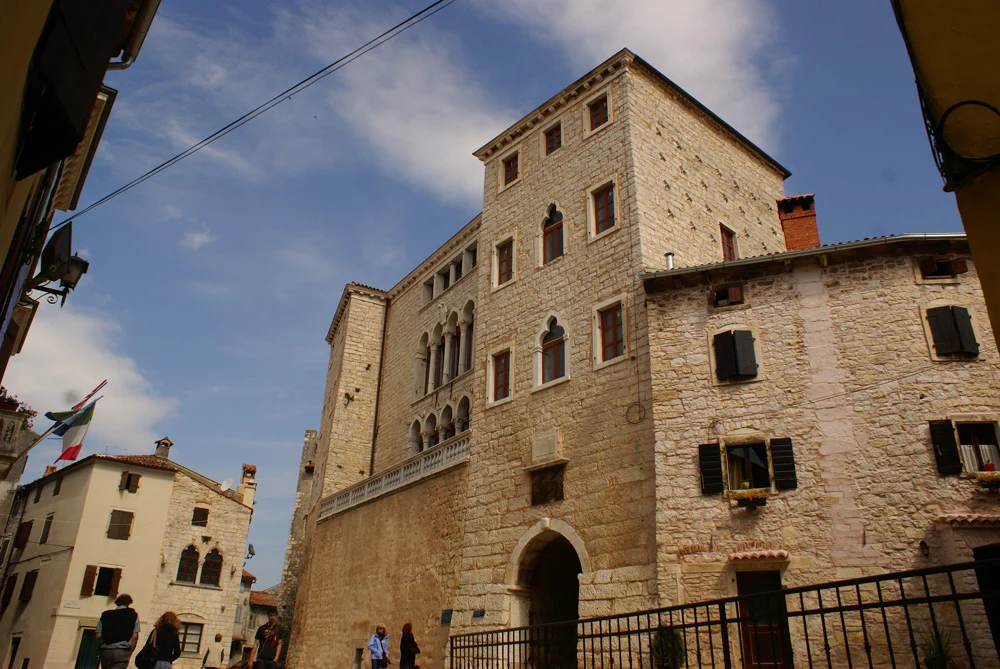
Bale is one of the easiest inland Istrian towns to visit from Rovinj when you want a change from the coast without committing to a full-day excursion. The stone old town is compact, the drive is short, and the main sights can be explored comfortably in half a day. Allow about four to six hours if you want time for the historic centre, a relaxed coffee or lunch, and one optional stop outside town.
Quick answer: Bale is roughly 15 km south of Rovinj and is best reached by car in around 20 minutes. Direct regional buses also pass through Bale, but their times are less flexible for sightseeing. The main reasons to go are the medieval street plan, the Soardo-Bembo Castle, small historic churches, the parish church and crypt, and the slower atmosphere of a lived-in Istrian hill town.
Is Bale worth a day trip from Rovinj?
Yes, especially if you prefer small historic towns to major attractions. Bale does not need a long checklist. Its appeal is the combination of narrow stone lanes, Venetian-era details, quiet squares and a centre that still feels residential rather than built around day-trippers.
It is also a useful contrast to Rovinj. Rovinj has the harbour, sea views and a much busier Old Town; Bale is inland, smaller and easier to explore slowly. If you want a Roman amphitheatre, museums and a larger urban centre, a Pula day trip from Rovinj is the stronger choice. If you want two or three unhurried hours in a compact stone town, Bale fits very well.
How to get from Rovinj to Bale
By car
Driving is the simplest option. The journey normally takes about 20 minutes, depending on traffic, and gives you freedom to add the Bale coast, a winery or another south-Istrian stop. If you are using a car for several excursions, our Rovinj by car guide explains the wider parking and driving practicalities around your stay.
Do not try to drive into the historic core. Park on the edge of the centre and continue on foot. Bale uses seasonal parking arrangements: in summer, designated lots such as Val de Godena, La Musa and Grote may be charged, while visitor information lists off-season parking as free. Check signs when you arrive because operating periods can change. The local Bale-Valle parking information is the best place to confirm the current system.
By bus
Bale sits on regional routes between Rovinj and Pula, so a bus day trip is possible. The trip itself is short, often around 15–25 minutes, but the main limitation is timetable flexibility rather than travel time. Check both the outward and return journey before leaving Rovinj; a convenient morning departure is not useful if the only return is much later than you want.
Brioni currently lists Bale as a stop on its Pula–Rovinj regional route, and departure patterns can change by season. Check the current Brioni route information for your travel date. If you are planning several excursions without a vehicle, our Rovinj without a car guide will help you decide which trips are realistic by public transport.
By bicycle
Strong recreational cyclists can reach Bale from Rovinj, but this is not the best choice for everyone. The distance is manageable, yet parts of the journey use ordinary roads rather than a continuous protected cycle path. Summer heat and traffic are the main drawbacks. Start early, carry enough water and use lights and high-visibility equipment.
What to see in Bale
Soardo-Bembo Castle
The landmark of Bale is the Soardo-Bembo Castle, also described as the Soardo-Bembo Palace. Its Gothic-Renaissance façade dominates the historic centre and was developed between older defensive towers. The building is closely associated with the Soardo and later Bembo families and today also serves the local Italian community.
The exterior is worth seeing even when interior access is limited. Look at the façade, the relationship between the palace and former defensive structures, and the tight street pattern around it. For current access details and an overview of the town’s cultural sites, use the official Bale tourist board sights page.
The old town core
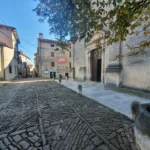
Bale’s historic centre is small enough to explore without a map. The best approach is to wander slowly through the stone-paved lanes around the castle rather than follow a rigid route. Look for old doorways, carved details, small courtyards, covered passages and the way houses were built closely inside the former defensive perimeter.
The centre is protected, but it is not an open-air museum. People live here, so keep voices down in residential lanes and avoid blocking doorways while taking photos.
Parish Church and crypt
The Parish Church of the Visitation of the Blessed Virgin Mary to St Elizabeth was built in its present form between 1879 and 1882 on a site with much older religious history. The church is connected with Blessed Julian, the patron saint of Bale, and its crypt and lapidary preserve stone fragments and archaeological material from earlier periods.
Opening access can vary, especially outside the main visitor season or around religious services. Treat the church primarily as a functioning place of worship and check locally before planning your day around an interior visit.
Church of the Holy Spirit
This small church is one of Bale’s more interesting details for visitors who enjoy medieval art. It is known for 15th-century frescoes. Access is not always as predictable as at a major museum, so think of it as a bonus rather than the only reason for your trip.
Town loggia, squares and everyday details
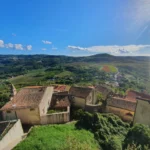
Part of Bale’s appeal is found between the named monuments: the town loggia, small squares, stone benches, shutters, staircases and views across surrounding olive groves. Give yourself at least 30 minutes with no fixed route. That is often the most rewarding part of the visit.
A practical half-day itinerary
This route works well if you leave Rovinj in the morning and want to return by mid-afternoon.
- 09:30–10:00: Leave Rovinj and travel to Bale.
- 10:00–10:30: Park outside the historic core and walk into the centre.
- 10:30–11:15: Explore the Soardo-Bembo Castle area and the main old-town lanes.
- 11:15–12:00: Visit the parish church area, crypt or another small cultural site if open.
- 12:00–13:15: Stop for coffee, a light lunch or a slow walk through the quieter streets.
- 13:15–14:00: Add a short final walk, local food purchase or viewpoint before returning to Rovinj.
If you prefer late-afternoon sightseeing, Bale can also work well before dinner. In summer this avoids some of the strongest midday heat, though you should check the opening times of any interior attraction you specifically want to enter.
Can you combine Bale with the coast?
Yes, but Bale town and the Bale coastline are separate parts of the municipality. The sea is several kilometres from the historic centre, so do not expect to walk from the old town to a beach as part of a casual visit.
With a car, you can turn the trip into a longer outing by adding the Mon Perin coast, San Polo or Colone area. Families may also be interested in the Paleo Park near the coast, which uses the area’s dinosaur discoveries as part of its theme. Treat this as a separate stop and verify seasonal operation before going.
Bale with children
Bale is manageable with children because the centre is compact and there are no long museum visits required. The main challenge is the paving: old stone lanes, steps and uneven surfaces can make lightweight strollers easier than large prams.
For younger children, a simple old-town walk followed by lunch is usually enough. If you want a fuller family day, add the coastal area or Paleo Park rather than trying to stretch the historic centre into a full-day attraction.
Where to eat and what to try
Bale has cafés, restaurants and konobas, but the exact number of open places changes significantly by season. In July and August you normally have more choice; in the quieter months, check opening days before arriving if lunch is central to your plan.
Good local choices include handmade pasta, Istrian prosciutto, sheep or cow’s milk cheeses, seasonal truffle dishes, local olive oil and Istrian wines such as Malvazija and Teran. If you only want a short visit, a coffee or light lunch in town works better than building the day around a long tasting menu.
Best time to visit Bale
Spring: Excellent for walking, cycling and quieter streets, with comfortable temperatures and green countryside.
Summer: Livelier and better for combining the town with the coast, but visit in the morning or late afternoon to avoid the hottest part of the day.
September: One of the easiest periods for a relaxed visit. The town is quieter than in peak summer, while restaurants and services are often still active.
Late autumn and winter: Very quiet and atmospheric, but some visitor-oriented businesses and interior attractions may have reduced hours or close on certain days.
Practical tips before you go
- Wear shoes with a good grip; polished stone can be slippery after rain.
- Carry water in summer, especially if you plan to continue to the coast.
- Do not rely on every church or cultural interior being open all day.
- Check the return bus before leaving Rovinj if you are not driving.
- Allow extra time if you want lunch; Bale is better enjoyed slowly than as a rushed photo stop.
- If you are driving south afterward, combining Bale with Pula is more logical than returning to Rovinj and setting out again.
- For a nature-focused alternative on another day, consider our Lim Channel from Rovinj guide.
How long do you need in Bale?
Two to three hours is enough for the historic centre if you mainly want to walk, see the main buildings and have a coffee. Four to six hours is better if you want lunch, possible interior visits and time to slow down. A full day only makes sense if you add the coastline, Paleo Park or another destination.
Who will enjoy Bale most?
Bale suits couples, independent travellers, photographers, architecture lovers and visitors who have already seen Rovinj’s major sights and want a quieter side of Istria. It is also a good choice for repeat visitors who do not need another high-intensity sightseeing day.
If your priority is beaches, large museums or a long list of attractions, Bale may feel too small on its own. Its value is precisely that it does not require much planning: arrive, walk, look closely, have something to eat and enjoy a few calm hours away from the busiest coastal towns.
Last updated: September 2026