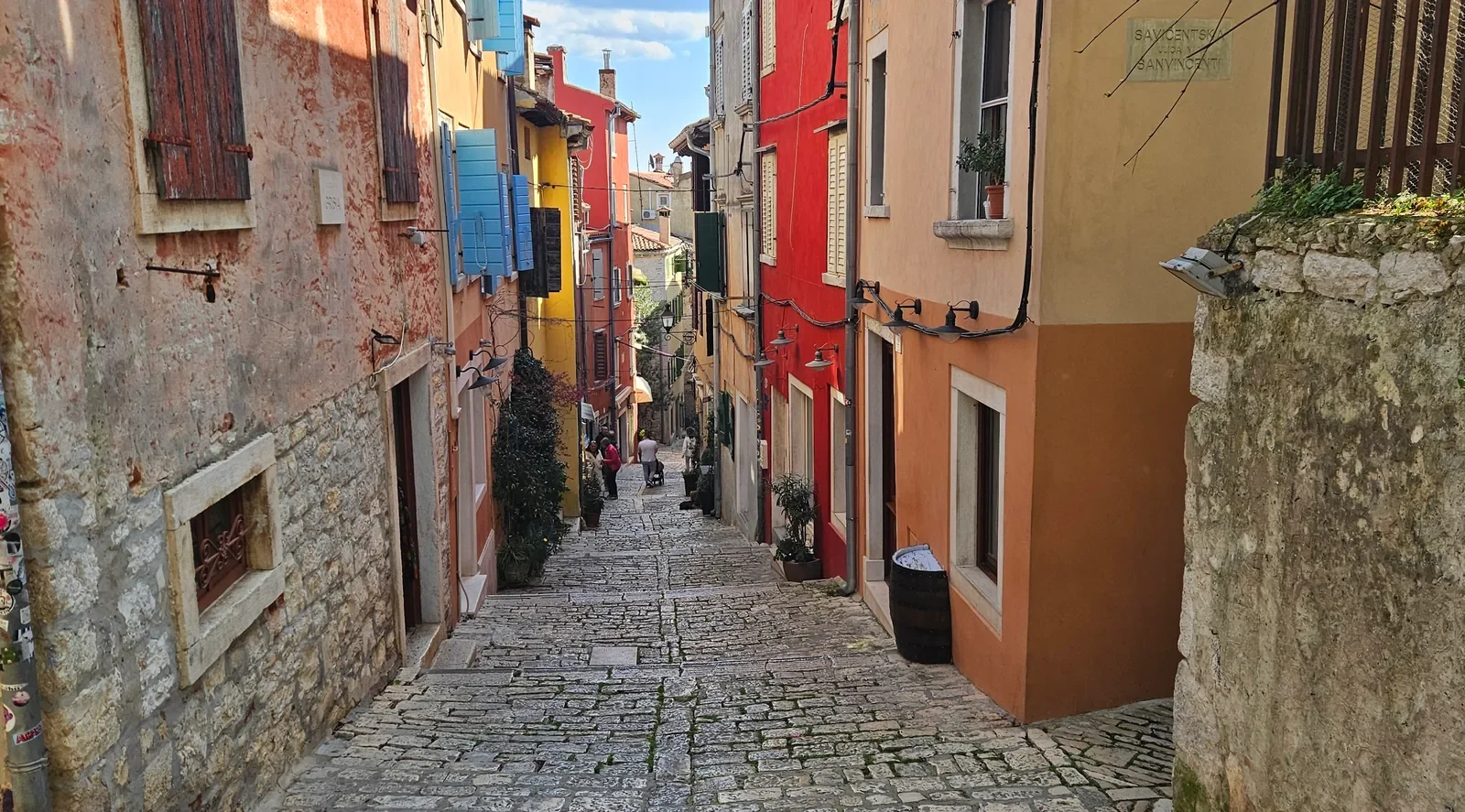
Rovinj is easy to fall for from photographs, but a smooth trip depends on knowing a few practical details that rarely make it into postcard descriptions. The Old Town is compact but steep in places, many beaches are rocky rather than sandy, summer transport works differently from winter, and a hotel that looks “close to the centre” on a map may feel much farther with luggage or in afternoon heat.
This guide focuses on those small realities: not reasons to avoid Rovinj, but details that help you plan the town as it actually works.
Last updated: September 2026
1. The Old Town is beautiful partly because cars do not belong there
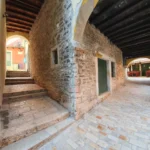
Rovinj Old Town is a pedestrian environment of narrow stone lanes, steps and tight passages. That atmosphere is one of its greatest strengths, but it also means you should not assume a taxi, transfer or rental car can stop directly outside an Old Town apartment.
If you are staying inside the historic core, ask your host where the realistic luggage drop-off point is and how far you will walk from there. A five-minute walk without bags can feel very different when you are pulling a suitcase over polished stone.
For orientation before arrival, see our Rovinj Old Town guide.
2. “Close on the map” does not always mean effortless
Central Rovinj is genuinely walkable, but maps flatten the things your legs notice: slopes, cobbles, steps and summer heat. This matters most when choosing accommodation. A property 800 metres from the harbour can be an easy stroll, or an awkward walk with luggage, depending on the route.
Check the actual walking route, not only the straight-line distance. Families with strollers, travellers with mobility limitations and anyone arriving with heavy bags should pay particular attention to elevation and steps.
3. Most Rovinj beaches are not sandy
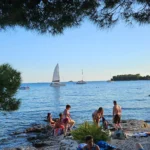
First-time visitors sometimes arrive expecting long sandy beaches. Rovinj’s coast is different. You will find pebbles, rock shelves, paved or landscaped bathing areas and small coves, often with very clear water.
Water shoes are useful on many stretches, especially for children or anyone uncomfortable walking over sharp stones. They also help on slippery rock near the waterline. The absence of sand is not a disadvantage once you know what to expect; it is part of why the water often looks so clear.
Compare the coast in our guide to the best beaches in Rovinj.
4. Shade matters more than beach facilities in July and August
A beach bar, changing room or shower is useful, but on the hottest days the most valuable feature may simply be reliable shade. Golden Cape and several pine-backed stretches are popular partly because you can combine swimming with time under trees.
If you are travelling with small children, older relatives or anyone sensitive to heat, plan your beach around shade and timing rather than choosing only by photos. Early morning and late afternoon are often far more comfortable than the middle of the day.
5. Rovinj has local buses, but they are seasonal
Rovinj is not a city with a dense year-round urban bus network. The City of Rovinj-Rovigno currently states that its municipal local lines operate seasonally from 1 June to 1 October, connecting the centre with areas including Amarin, Borik, Valalta, Polari, Villas Rubin, Centener, Veštar and Kokaleto.
That makes summer stays outside the centre easier than some visitors expect. It also means you should not build an October, winter or spring itinerary around a summer timetable. Check the official city local-transport page for current details.
If you are planning a fully car-free stay, our Rovinj without a car guide explains the wider combination of walking, buses, bikes, boats and taxis.
6. A car is useful for Istria, but often inconvenient in central Rovinj
Renting a car makes excellent sense if you want to explore hill towns, wineries, rural restaurants and remote coves. The same car can become unnecessary once you are back in central Rovinj, where most sightseeing is done on foot and the historic core is pedestrianised.
A good compromise is to stay without a car for the Rovinj part of your trip and rent one only for the days when you need it. If you are driving for the entire holiday, choose accommodation with a clear parking arrangement rather than assuming street parking will be easy.
7. Parking should be part of your arrival plan, not an afterthought
In high season, the question is not simply “Can I park in Rovinj?” but “Where will I park when I arrive, and how will I move the luggage from there?” Central parking is in demand, and the city actively enforces pedestrian-zone and parking rules.
Do not follow another vehicle into a restricted lane because a navigation app tells you that your accommodation is ahead. Confirm the correct approach with your host and use official parking areas.
Before driving in, read our complete Rovinj parking guide.
8. The Old Town stone can be surprisingly slippery
Rovinj’s polished stone streets look beautiful, especially after rain, but smooth surfaces can become slick. Flat shoes with decent grip are more practical than thin soles or unstable sandals for climbing toward St. Euphemia.
This is also worth remembering after a swim: wet feet and polished stone are not a great combination. Pack footwear for walking, not only beach footwear.
9. Rovinj changes character between 7 a.m. and 9 p.m.
If you only experience the centre between late morning and early evening in July or August, you see the busiest version of Rovinj. Early morning is quieter, cooler and better for photography or a relaxed walk. Later in the evening, the waterfront becomes lively again, but without the same daytime heat.
Use the rhythm instead of fighting it: explore the Old Town early, spend the hottest hours at lunch, in shade or by the sea, and return to the centre later.
10. Restaurant location changes the experience as much as the menu
Waterfront tables have obvious appeal, but they are not the only way to eat well in Rovinj. Streets just outside the most photographed core, neighbourhood restaurants and traditional konobas can offer a quieter atmosphere and a more local rhythm.
In peak summer, book important dinners rather than assuming you can walk into a specific restaurant at the exact sunset hour. For a broader idea of current spending, see our Rovinj travel costs guide.
11. Rovinj and Rovigno are both correct names
You will see both Rovinj and Rovigno on signs, institutions and local information. This is not inconsistent branding. Croatian and Italian have equal official status in the city, reflecting Rovinj’s long-standing Italian community and Istrian cultural history.
The city itself officially uses the bilingual name Rovinj-Rovigno. Knowing this makes street signs and local place names less confusing, especially for Italian-speaking visitors. The City of Rovinj-Rovigno explains the bilingual status in its official city information.
12. The sea is part of the transport network
Boats in Rovinj are not only sightseeing attractions. Seasonal passenger services make nearby islands practical for a beach day, and excursion boats connect the town with other coastal experiences.
At the same time, sea transport is more weather-dependent than a road journey. Wind, rough water or operational changes can affect departures, so keep some flexibility around island or boat-trip days rather than building a tight chain of reservations.
13. Summer Rovinj and winter Rovinj are almost different destinations
July and August bring the widest choice of tours, boat services, beach facilities and late-opening businesses, but also the highest demand, hottest walking conditions and busiest streets. Spring and autumn are calmer and often better for walking or cycling, while winter is much quieter and more local in character.
Do not assume a service you saw in a summer video operates the same way in November. Seasonal opening is normal in a tourism-focused coastal town.
14. Where you stay can matter more than how luxurious the room is
For a short trip, location can save more time than an extra hotel amenity. Old Town accommodation gives atmosphere and immediate access to restaurants, but may involve steps and luggage carrying. Centener and areas toward Golden Cape can be better for beaches and cycling. Borik can suit travellers who prefer swimming and a quieter setting but is farther from the historic core.
Think about the journeys you will repeat every day: breakfast, beach, parking, evening dinner and the walk home. Those daily routes shape the holiday more than a one-time sightseeing trip.
15. The best Rovinj plan leaves one part of the day unscheduled
Rovinj rewards slow time. A swim may last longer than planned, a boat departure may shift, a sudden summer shower can change the afternoon, or you may simply find a shaded café and decide not to move.
A tightly scheduled checklist works against one of Rovinj’s main advantages: the town is compact enough that you can change plans without losing the day. Build around one or two priorities, then leave space for the sea, weather and your own energy level.
What first-time visitors should remember
- Confirm the real luggage route if you are staying in the Old Town.
- Pack shoes with grip and consider water shoes for rocky beaches.
- Plan shade and swimming times in midsummer.
- Do not assume local buses operate year-round.
- Arrange parking before arriving by car.
- Use early mornings and later evenings for the historic centre in peak season.
- Expect Croatian and Italian place names to appear side by side.
- Keep boat and island plans flexible around weather.
- Choose accommodation by the routes you will walk every day, not only by distance on a map.
Final advice
The useful version of Rovinj is not only the postcard view. It is knowing when to walk, where a car stops being helpful, why water shoes can matter, how the summer buses work, and why an Old Town apartment may require a little luggage planning.
Once those details are understood, Rovinj becomes very easy to enjoy. Plan the practical parts before arrival, then give yourself enough unstructured time to experience the town at a slower local pace.