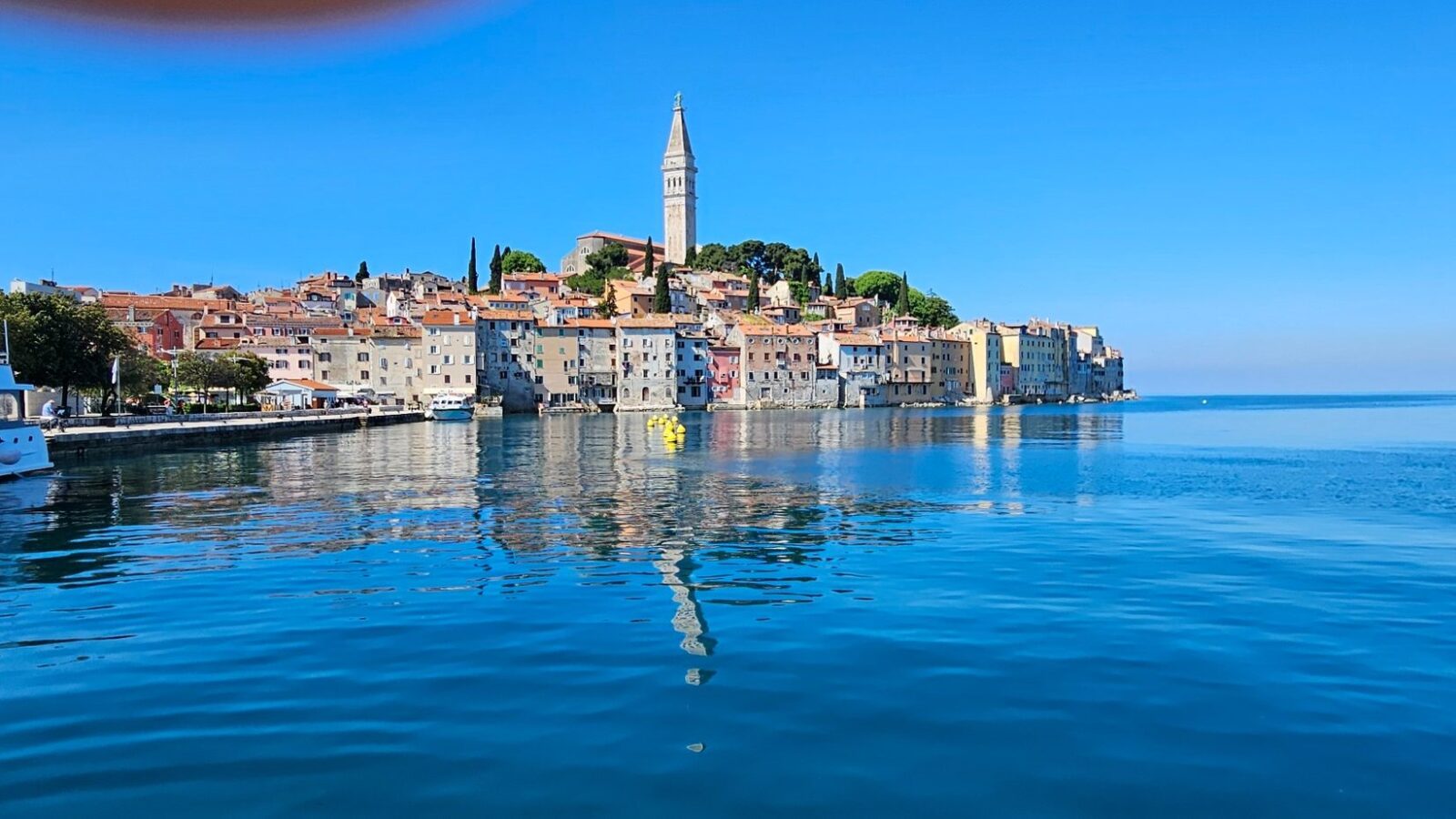
Staying in Rovinj Old Town puts you inside the part of the city most visitors come to see: stone lanes, small squares, galleries, restaurants, the waterfront and the climb toward St. Euphemia. It is one of the best choices for atmosphere, short stays, couples and travellers who want to explore on foot.
It is not automatically the most practical choice. Normal car access is restricted, many buildings involve polished stone, slopes or stairs, and the exact location of an apartment can make a big difference when you arrive with luggage. If beaches, easy parking or step-free access matter more than historic atmosphere, another part of Rovinj may suit you better.
For a city-wide comparison first, see Where to Stay in Rovinj.
Quick answer: is Rovinj Old Town a good place to stay?
| Good choice if you want | Think twice if you need |
|---|---|
| Historic atmosphere outside your door | Guaranteed parking beside the property |
| Restaurants and evening walks on foot | Step-free or very easy luggage access |
| A short stay without a car | A beach-first family holiday |
| Easy access to central sights | A quiet residential setting in high season |
| Characterful apartments and old stone buildings | Modern lifts, large rooms or resort-style facilities |
Best for: couples, first-time visitors, short breaks, photographers, food-focused travellers and anyone planning a mostly car-free stay.
Less convenient for: visitors with limited mobility, travellers with lots of luggage, families who want to be beside a conventional beach, and drivers who expect parking at the door.
What counts as “Rovinj Old Town”?
The historic core occupies the peninsula west of the main square and harbour. Balbi’s Arch marks one of the best-known entrances, while Grisia and the surrounding lanes climb toward the Church of St. Euphemia at the top.
Booking sites sometimes use “Old Town” loosely for properties in the wider centre. That is not necessarily a problem, but it changes the experience. A room near the harbour or Carera can still be extremely central while being flatter and easier to reach than accommodation halfway up the historic hill.
Before booking, check the exact address on a walking map rather than relying only on the neighbourhood label.
For the geography and main sights, use Rovinj Old Town Guide.
Lower Old Town, mid-slope or near St. Euphemia?
Near the harbour and lower lanes
This is the easiest part of the historic core for most short-stay visitors. You remain close to restaurants, the waterfront, boat departures and the wider centre, while avoiding some of the steepest walking.
It can also be busier and noisier, especially near restaurant terraces and popular pedestrian routes. Ask whether your room faces the street and whether windows are modern enough to reduce evening noise.
Mid-slope lanes
The streets between the waterfront and the top of the peninsula offer the classic Old Town feeling: narrow passages, old façades and small openings toward the sea. They can also involve uneven surfaces, short stairways and routes that feel steeper with suitcases than they appear on a map.
This is a strong choice if atmosphere matters more than convenience and you are comfortable walking several times a day.
Near St. Euphemia
Staying near the top gives you one of the most distinctive settings in Rovinj, with the church, viewpoints and quieter side lanes close by. The trade-off is simple: almost every trip to the harbour, market or wider centre involves walking downhill and then back up.
For a two-night romantic stay, that can be part of the appeal. For a family carrying beach equipment every day, it may become tiring quickly.
Car access and luggage: the detail that matters most
Rovinj’s historic centre is pedestrian-oriented and normal motor-vehicle access is restricted. The City has also enforced access rules and restricted-traffic zones around the historic core, particularly during the busier season. Do not plan on a rental car, taxi or transfer being able to stop directly outside every Old Town property.
The practical question to ask your host is not simply “Can a taxi reach the apartment?” Ask:
- Where is the nearest legal drop-off point?
- How many minutes do you walk from there?
- Are there stairs between the drop-off point and the entrance?
- Does the host offer help with luggage?
- If you arrive late, will the same access arrangement still apply?
Current access arrangements can change, so follow instructions from your accommodation and check official city information before arrival. The City of Rovinj-Rovigno has published enforcement notices confirming that the pedestrian zone is reserved for pedestrians and specially authorised vehicles.
Parking when you stay in the Old Town
If you are driving, assume that you will park outside the historic core unless your accommodation gives you a specific legal arrangement. A description such as “parking nearby” does not necessarily mean private or reserved parking.
Before paying a non-refundable rate, ask whether parking is:
- private and reserved;
- public and paid;
- included in the room rate or extra;
- close enough to walk with luggage;
- available for the full stay or subject to space.
Drivers should read Where to Park in Rovinj before choosing an Old Town property.
Cobbles, stairs and accessibility
The beauty of Rovinj’s historic centre comes with practical compromises. Many streets are paved with smooth limestone, some routes are steep, and old buildings may have narrow staircases with no lift.
The official Rovinj Tourist Board also advises visitors to use footwear with grip because polished stone can become slippery, especially after rain. If mobility is important, ask for exact details about the entrance rather than relying on a listing that simply says “central”.
Useful questions include:
- Is there a lift?
- On which floor is the room?
- How many steps are there before the lift, if any?
- Is the shower walk-in?
- Can a taxi stop within a short, level walk?
- Is the route from the harbour uphill?
For travellers with significant mobility limitations, the harbour edge or wider centre can provide much of the same convenience with fewer obstacles.
Noise: romantic streets are still working streets
The Old Town is not a museum after sunset. People live here, restaurants operate late in summer, deliveries happen in the morning and visitors move through the main lanes well into the evening.
If sleep matters more than being directly above the action, look for accommodation on a smaller side street rather than immediately over a busy terrace or main pedestrian route. Air conditioning also matters: if you need to keep windows open on a hot night, street noise becomes more noticeable.
In July and August, assume the centre will feel lively. In May, June, September and early October, the balance between atmosphere and crowd levels is often easier for many visitors.
How close are the beaches?
Old Town accommodation gives you sea access, but not necessarily the classic beach experience families imagine. Monte/Balota sits directly on the rocky edge of the peninsula, with sections better suited to confident swimmers than small children.
For larger beach areas, you will normally walk or cycle toward Mulini, Lone and Golden Cape, or travel farther toward Cuvi and Borik. That is completely manageable for visitors who want a mixed sightseeing-and-swimming holiday, but less convenient if your plan is to spend every day on the beach.
Compare options with Best Beaches in Rovinj.
Is the Old Town good without a car?
Yes. In fact, this is one of the strongest reasons to stay here. Restaurants, the harbour, central sights, boat departures and the bus station area are all reachable on foot, while bicycles and occasional taxis can cover longer trips.
If you plan a completely car-free holiday, check Rovinj Without a Car.
Eating and everyday convenience
For restaurants, wine bars and evening atmosphere, the Old Town is difficult to beat. You can walk to dinner, stay out for a late waterfront stroll and return without organising transport.
The trade-off is that historic-centre accommodation may be less convenient for large grocery shops, private parking and the everyday logistics of a week-long family stay. If you are renting an apartment and plan to cook often, check the nearest supermarket and how far you must carry groceries uphill.
For dining ideas, use Restaurants in Rovinj.
Who should choose Rovinj Old Town?
Couples
For a short romantic trip, the Old Town is one of the easiest recommendations. Evening walks, restaurants, sea views and historic streets are part of the stay rather than something you commute to.
First-time visitors
If you have only two or three nights, staying centrally reduces wasted time. You can explore early in the morning before day visitors arrive and return easily during the day.
Car-free travellers
The area works very well if you do not intend to rent a car. Just confirm your luggage plan from the bus station or transfer drop-off point.
Photographers and early walkers
Sleeping inside the historic core makes it easier to enjoy the streets before breakfast, when they are quieter and the light is softer.
Who may be happier elsewhere?
Families with small children: Centener or Cuvi can be easier if beach access, a stroller and more space matter most.
Visitors with limited mobility: choose a flatter central location unless a specific Old Town property has genuinely suitable access.
Drivers: staying outside the pedestrian core usually makes parking and day trips simpler.
Beach-first visitors: Cuvi, Borik or accommodation near Golden Cape may reduce daily walking with towels and equipment.
10 things to check before booking
- The exact street, not only the “Old Town” label.
- Walking time from the legal drop-off point.
- Number of stairs to the room.
- Whether the building has a lift.
- Where you will park if arriving by car.
- Whether air conditioning reaches the bedroom.
- Street-facing or courtyard-facing windows.
- Distance to the beach you actually want to use.
- Nearest grocery shop if you plan to self-cater.
- Late check-in instructions if arriving after reception hours.
Final verdict
Choose Rovinj Old Town if you want Rovinj’s historic atmosphere to be part of everyday life and you are happy to trade some convenience for location and character. It is particularly strong for couples, first visits, short stays and car-free travellers.
Choose the wider centre, Centener, Cuvi or Borik instead if you prioritise parking, easier luggage access, beach logistics, step-free movement or a quieter residential setting. The best choice is not the property with the shortest straight-line distance to the church; it is the one whose access, terrain and daily routine match the way you actually plan to spend your holiday.
Last updated: September 2026