A rainy day in Rovinj does not have to become a lost holiday day. The town is compact enough to combine a museum, a long lunch, local culture, shopping and short Old Town walks between showers without spending half the day in transport.
The key is to plan around the type of weather. Light showers still leave plenty of time for the historic centre. Persistent rain calls for a more indoor-focused route. Thunderstorms and strong wind are different: avoid exposed waterfronts, slippery coastal rocks, forest paths and boat trips until conditions improve.
Last updated: September 2026
Quick answer: what can you do in Rovinj when it rains?
- Visit the City Museum of Rovinj-Rovigno.
- Learn about Rovinj’s maritime traditions at the House of Batana.
- Spend time over an Istrian lunch instead of rushing between sights.
- Explore Carera Street, small shops and galleries when the rain eases.
- Visit a church or historic interior, while respecting services and opening times.
- Use short dry windows for the Old Town rather than abandoning it completely.
- Book a spa or wellness treatment if your hotel or another local property offers suitable access.
- With children, keep the day flexible and combine one or two indoor stops with food and short walks.
Rovinj does not have a huge indoor-attractions district. A good rainy-day plan is therefore about combining several smaller experiences rather than looking for one attraction that fills the entire day.
Read more: Best Things to Do in Rovinj
1. Start with the City Museum of Rovinj-Rovigno
The City Museum is one of the most useful rainy-day stops because it is central, cultural and easy to combine with the Old Town. It occupies a historic palace near the main square and presents exhibitions connected with Rovinj, art, archaeology and the wider Rovinj area.
At the time of this September 2026 update, the museum’s official website lists opening hours from Tuesday to Sunday, 10:00–12:00 and 16:00–20:00, with admission to the exhibitions free. There is a long midday closure, so do not build your entire day around arriving at 13:00. Check the official museum website before visiting because exhibitions and opening arrangements can change.
This is a particularly good stop in steady rain, but it is not a giant museum. Allow roughly an hour unless a temporary exhibition especially interests you.
2. Visit the House of Batana
The House of Batana is small, but it explains something that generic sightseeing often misses: Rovinj’s relationship with the sea, fishing and the traditional flat-bottomed batana boat. It is a better rainy-day choice than simply waiting in a café because it gives context to the harbour, boats and local identity you see outside.
For September 2026, the official Batana information lists split opening hours of 10:00–13:00 and 18:00–21:00, with Sunday closed. Current listed admission is €5 for adults and €4 for pupils, students and pensioners. Seasonal hours are very different during other months, so verify the official Batana website on the day of your visit.
If the rain clears later, the museum also makes the waterfront more interesting because you will recognise the traditional boats and maritime details more easily.
3. Turn lunch into part of the day’s plan
Rain is a good reason to slow down over food rather than squeeze lunch between beach time and sightseeing. Rovinj’s food scene works well for this because you can build the meal around Istrian dishes instead of choosing the nearest place simply to get out of the rain.
Look for dishes such as fuži or pljukanci pasta, seasonal truffle dishes, fish, maneštra, local cheeses, Istrian olive oil and regional wines. In cooler weather, a proper konoba-style meal can easily become one of the better parts of the day.
Reservations are worth considering on a wet summer evening. When beach plans disappear, many visitors make the same switch to restaurants at roughly the same time.
Read more: What to Eat in Rovinj
4. Explore the Old Town in short dry windows
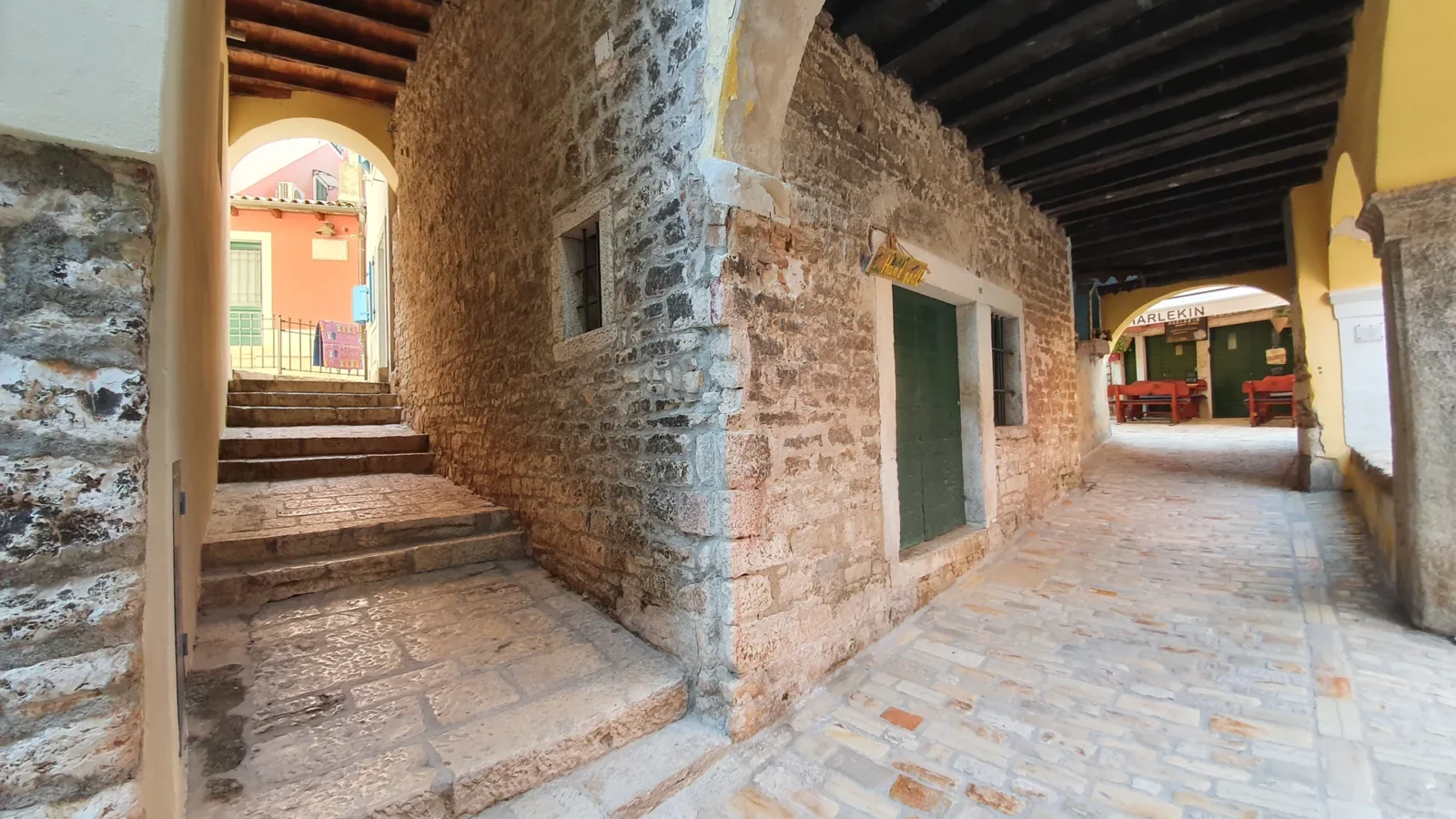
You do not need perfect weather to see Rovinj Old Town. In fact, the stone lanes can be atmospheric in light rain and noticeably quieter than on a sunny summer afternoon. The practical problem is the paving: polished limestone can become slippery, especially on steeper streets.
Wear shoes with good grip, keep your hands free on steep descents and avoid rushing. Grisia and the lanes around St. Euphemia involve climbing, so visitors with limited mobility may prefer the flatter harbour, Carera and main-square area until the ground dries.
A useful wet-weather approach is to move in short sections: café or museum, ten to twenty minutes outside, then another indoor stop. This works better than trying to complete a long walking route under an umbrella.
Read more: Rovinj Old Town
Read more: Rovinj Old Town Walking Route
5. Visit a church or historic interior
Churches can provide a cultural stop during unsettled weather, but they should not be treated simply as rain shelters. St. Euphemia is Rovinj’s most important church and the climb is worthwhile when conditions are safe. Other historic churches and chapels are scattered around the centre.
Opening times can vary, and access may be affected by services, religious events or maintenance. Dress and behave respectfully, and do not assume every church will be open simply because it appears on a map.
If the rain is heavy, postpone the steep climb to St. Euphemia rather than forcing it. The stone streets are a bigger issue than the distance.
Read more: Churches in Rovinj
6. Browse Carera, local shops and galleries
Carera is one of the most practical streets for a rainy spell because it keeps you close to cafés, shops and the main pedestrian centre. Small galleries, souvenir shops and local-product stores can fill the gaps between showers without requiring a special journey.
Do not expect every gallery or seasonal shop to keep identical hours year-round. In the shoulder season, opening can be more limited than in July and August.
If you are buying food products, olive oil, wine or other local goods, use the rainy day to compare producers and labels rather than buying the first souvenir you see.
Read more: Shopping in Rovinj
7. Consider a spa or wellness afternoon
If the forecast shows several hours of persistent rain, a spa treatment, indoor pool or wellness session can be a sensible reset. Several larger hotels in and around Rovinj have wellness facilities, but access for non-guests, day passes and treatment availability vary.
Check directly with the property before walking over. On wet days, appointments can fill quickly because other visitors have the same idea.
8. What to do in Rovinj with kids when it rains
Rovinj is easier with children on a mixed-weather day than during uninterrupted heavy rain. The best strategy is usually one short cultural stop, a food break and a simple activity rather than expecting young children to spend hours in museums.
- Choose the City Museum if the current exhibition suits their age.
- Use the House of Batana for boats and local maritime stories.
- Plan a café, ice-cream or lunch stop before children are already tired and wet.
- Keep a dry change of socks or a light spare layer in the bag.
- If your accommodation has an indoor pool or play space, save it for the wettest part of the day.
Rovinj’s Old Town has many steps and slick stones, so a stroller can be more awkward in rain than in dry weather.
Read more: Rovinj with Kids
9. What not to do during bad weather
There is a difference between light rain and genuinely poor conditions. When thunderstorms, strong wind or rough seas arrive, skip activities that depend on exposed coast or sea conditions.
- Do not plan a boat trip simply because the ticket was already on your itinerary. Operators may cancel or change departures for safety reasons.
- Avoid swimming from rocky entries during rough conditions.
- Do not use exposed coastal rocks as viewpoints in strong wind or heavy rain.
- Avoid forest and park routes during severe wind because branches can fall.
- Be cautious on the steep polished stone streets of the Old Town.
Read more: Rovinj Boat Trips
A practical rainy-day itinerary
If showers are light and intermittent
- Morning coffee and a short harbour walk.
- House of Batana.
- Old Town and St. Euphemia during a dry window.
- Long Istrian lunch.
- City Museum in the late afternoon.
- Carera or shopping before dinner.
If rain is steady for most of the day
- City Museum during its morning opening.
- Lunch near the centre.
- Shopping, galleries or a café around Carera.
- House of Batana during its evening opening period if operating.
- Dinner or a pre-booked wellness session.
If there is a thunderstorm or strong wind
Keep the plan compact. Stay close to your accommodation or the central pedestrian area, minimise exposed waterfront walking and wait for conditions to improve before returning to viewpoints, beaches, parks or the harbour.
Should you change your day-trip plans because of rain?
Not automatically. Weather can vary across Istria, but moving to another town is not useful if the same weather system covers the region. Check the forecast and radar before spending time driving simply to escape rain.
If the weather improves later, Rovinj is compact enough that you can still fit in a sunset walk, the harbour or a short Old Town route without trying to recover every cancelled activity.
What to pack for a wet day in Rovinj
- A light waterproof jacket rather than relying only on an umbrella.
- Shoes with good grip for wet stone.
- A compact umbrella for calm rain.
- A waterproof bag or cover for phones and cameras.
- A light extra layer outside summer.
Umbrellas are less useful during strong coastal wind, so a hooded waterproof layer is often the better choice.
Final tip
The best rainy day in Rovinj is rarely a full day indoors. Use the compact centre to alternate culture, food and short walks, and save beaches, boat trips, exposed viewpoints and forest routes for safer conditions. One wet day can actually be a good opportunity to see the museums, local traditions and food culture that are easy to skip when the weather is perfect.
Read more: Best Time to Visit Rovinj