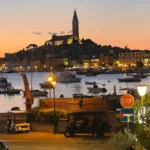
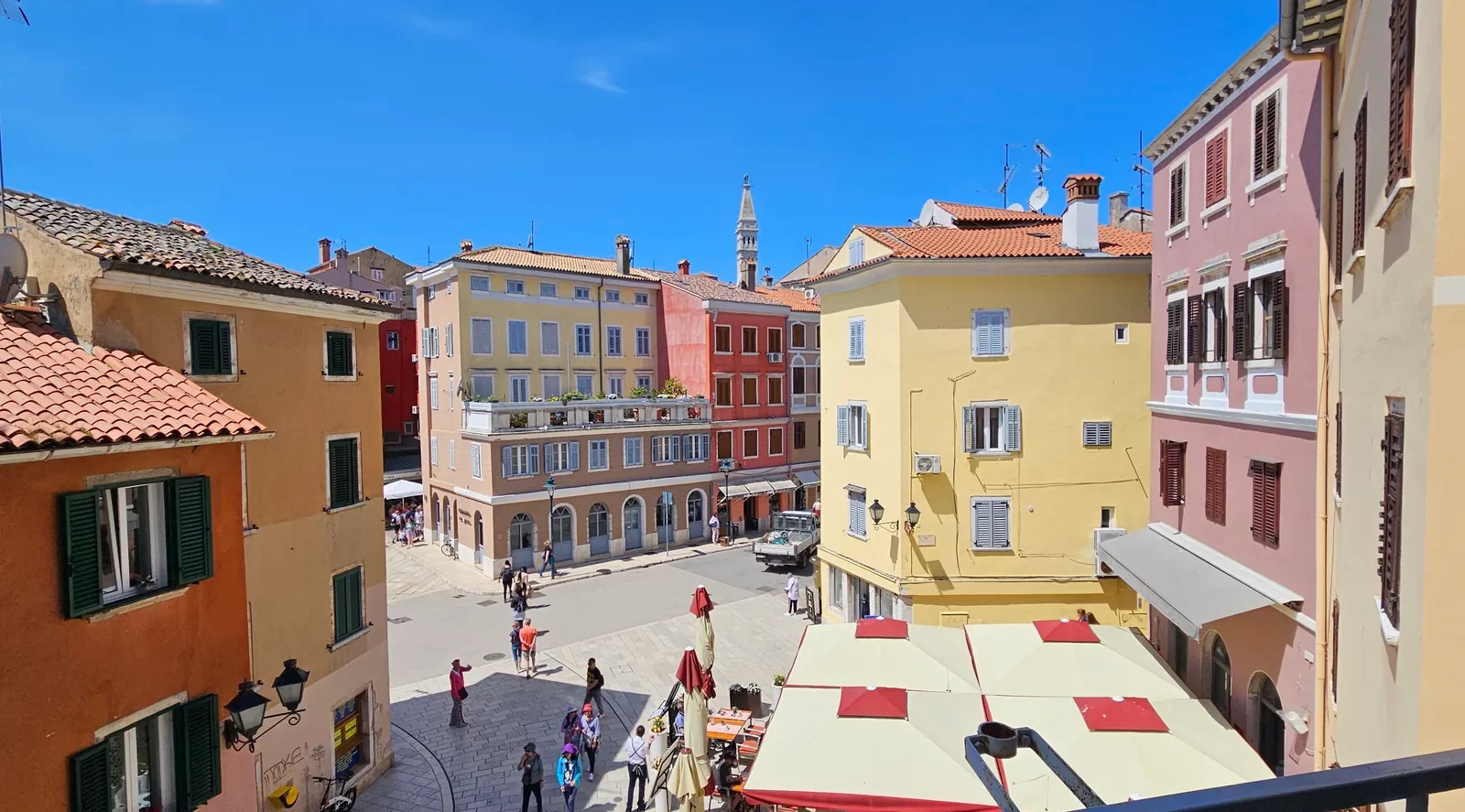
Rovinj is known for its Old Town, waterfront and beaches, but its museums add the history behind the scenery. The strongest cultural stops are compact enough to combine in one day: the City Museum for local history, archaeology and art; the Batana Eco-museum for Rovinj’s fishing and boat-building traditions; and Rovinj Aquarium for the marine life of the northern Adriatic.
Last updated: September 2026.
City Museum of Rovinj-Rovigno
The City Museum is the best starting point for visitors who want a broader understanding of Rovinj. Its collections cover archaeology, history, ethnography and art from Rovinj and the surrounding area, while temporary exhibitions change during the year.
The museum is at Trg na mostu 1, close to the entrance to the historic centre. In September 2026 it lists opening hours from Tuesday to Sunday, 10:00-12:00 and 16:00-20:00, with free admission to exhibitions. The museum also states that its historic building is not adapted for people with limited mobility.
One 2026 exhibition, Selected from Archaeological Localities of the Rovinj Region, is scheduled through 31 December 2026. Check the current programme before visiting because exhibitions change.
Read more: Rovinj Old Town
Batana Eco-museum
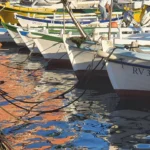
The Batana Eco-museum focuses on the flat-bottomed wooden fishing boat that is closely connected with Rovinj’s maritime identity. The House of Batana stands on the waterfront at Obala P. Budicina 2.
The experience is wider than a conventional small museum. It connects traditional boats with fishing, boatbuilding, local dialect, music, food and the people who keep those traditions alive. Seasonal programmes can include boat experiences, workshops and cultural evenings.
For September 2026, the House of Batana lists hours of 10:00-13:00 and 18:00-21:00, with Sunday closed. Current ticket information lists EUR 5 for adults and EUR 4 for pupils, students and pensioners. Hours vary by month, so check again for off-season visits.
Read more: Rovinj Harbour
Rovinj Aquarium
Rovinj Aquarium is a small historic aquarium connected with Rovinj’s long tradition of marine research rather than a large modern entertainment complex. The marine research station in Rovinj dates to 1891, when it was established as a field station linked with the Berlin Aquarium. Today the aquarium forms part of the Centre for Marine Research of the Ruder Boskovic Institute.
Official Istria visitor information currently lists regular opening from 2 April to 15 October, 09:00-16:00. It is closed to regular visitors outside that period, with group visits possible by arrangement. The aquarium is at Giordano Paliaga 5.
It is best suited to visitors interested in local Adriatic species, families looking for a short educational stop and travellers curious about the scientific side of Rovinj.
Read more: Rovinj with Kids
Franciscan Monastery collection
The Franciscan complex contains a collection of liturgical objects, paintings and sculptures. It is a useful addition for visitors especially interested in sacred art and church history.
This is an active religious setting rather than a conventional museum with a predictable visitor flow, so access can vary. Check locally before making a special trip and avoid visiting during services unless you are attending them.
Read more: Churches in Rovinj
Galleries and art spaces
Rovinj also has a strong visual-art tradition. Grisia and the surrounding Old Town lanes contain galleries and artists’ studios, although opening times can be seasonal and informal. These spaces are best treated as a complement to the museums rather than as substitutes for them.
A practical half-day museum route
- Start at the City Museum when it opens.
- Walk into the Old Town and explore Grisia.
- Continue toward St. Euphemia if you also want church history and viewpoints.
- Return to the waterfront for the Batana Eco-museum.
For families, another useful combination is Rovinj Aquarium in the morning followed by a waterfront walk and Batana later in the day.
Museums in Rovinj when it rains
The City Museum and Batana are useful wet-weather stops, but Rovinj’s museums are relatively small. On a day of steady rain, combine one or two museums with lunch, coffee or shopping instead of expecting one institution to fill the entire day. Old Town stone can also become slippery when wet.
Read more: Rovinj on a Rainy Day
Which museum should you choose?
- City Museum: best for the broadest overview of Rovinj’s history, archaeology and art.
- Batana Eco-museum: best for local maritime culture and living tradition.
- Rovinj Aquarium: best for Adriatic marine life and marine-research history.
- Franciscan collection: best as an extra stop for sacred art and church heritage.
Most visitors do not need to see everything in one day. One or two cultural stops combined with the Old Town and waterfront usually produces a better-paced visit.
Read more: Best Things to Do in Rovinj