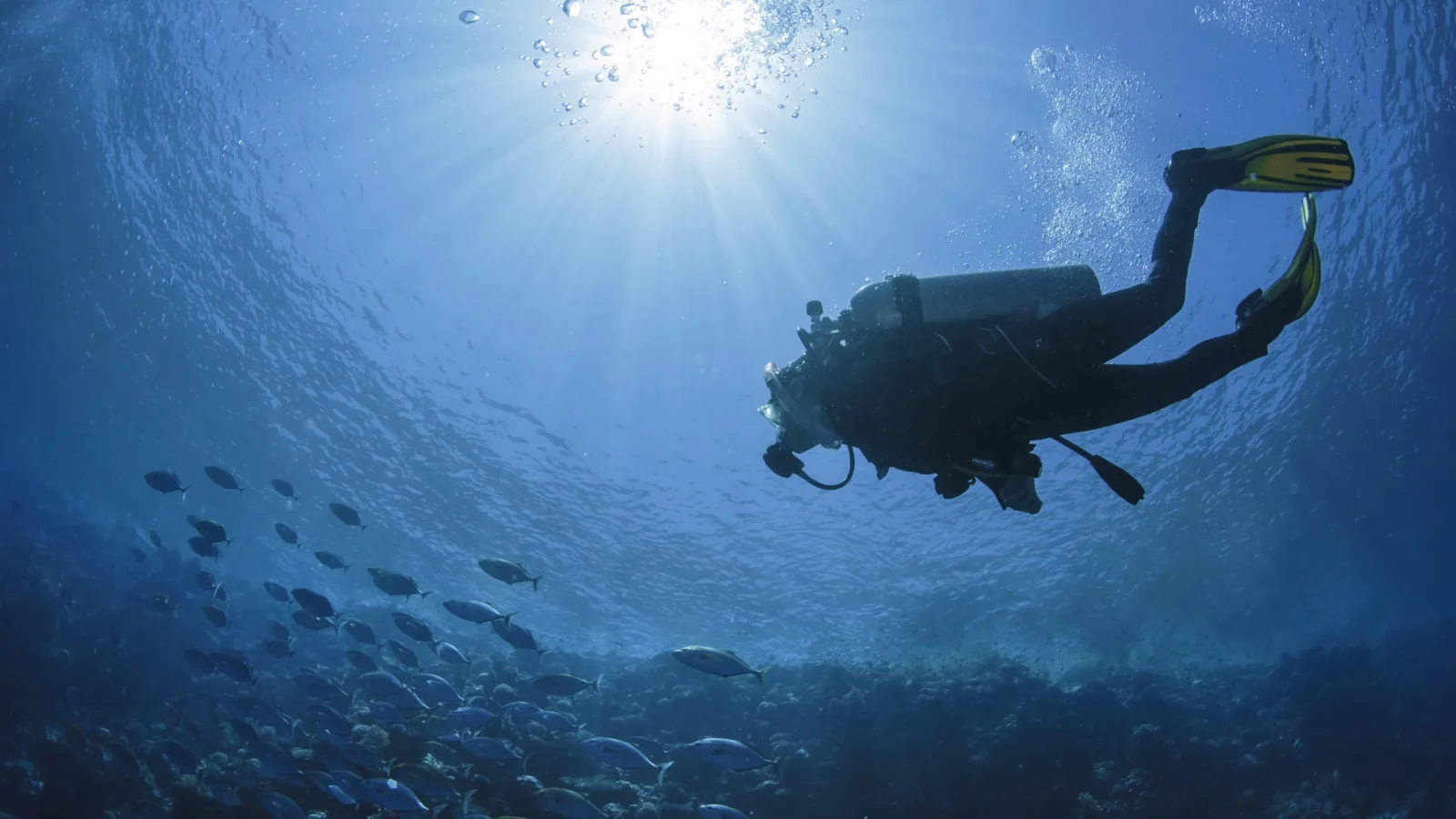
Rovinj is one of the better bases in Istria for scuba diving because the coast combines sheltered training areas, islands, reefs and several notable wrecks within reach of local dive centres. Beginners can book a supervised introductory dive, while certified divers can choose shore dives, boat dives and deeper wreck excursions.
The main thing to understand is that “diving in Rovinj” covers very different experiences. A first dive in a calm bay is not the same activity as a 30–40 metre wreck dive. Your certification level, recent experience, sea conditions and the dive centre’s own safety rules determine which sites are suitable.
Last updated: September 2026.
Is Rovinj good for scuba diving?
Yes. Rovinj has a useful mix of easy and advanced diving. The local coastline is rocky, the water is usually clearest outside periods of heavy rain or strong wind, and the archipelago gives operators multiple sites to choose from depending on weather and diver experience.
The official Rovinj Tourist Board highlights reefs, walls, caves, islands and shipwrecks around the Rovinj aquatorium. It also notes that diving is possible throughout the year, with especially favourable conditions from roughly May to November. In practice, the main holiday diving season is spring through autumn, when more centres, boats and daily departures are operating.
For a wider overview of active experiences, see things to do in Rovinj.
Who can dive in Rovinj?
Complete beginners
You do not need an Open Water certification to try scuba diving for the first time. Rovinj dive centres offer introductory or discovery dives that begin with a briefing, equipment familiarisation and a closely supervised shallow-water dive.
This is the right option if you are curious about scuba but do not want to commit to a full certification course during your holiday. Allow more time than the underwater portion alone: registration, briefing, equipment fitting and entering the water all take time.
Certified recreational divers
If you already hold an internationally recognised certification, local centres can organise guided shore and boat dives. Bring your certification card or digital proof, and it is sensible to have your recent dive history available. A centre may recommend a check dive if you have not dived for a long period.
Advanced and wreck divers
Rovinj is particularly interesting for divers who are qualified and experienced for deeper dives. Some of the best-known wrecks lie well beyond beginner depth limits. Operators may require an advanced certification, a minimum number of logged dives, a deep-diving qualification or other experience before accepting a diver for a specific wreck.
Best-known dive sites around Rovinj
Islands, reefs and shallower sites
Local operators regularly use sites around the Rovinj archipelago and nearby reefs. Common names include Banjol, St. John (Sveti Ivan), Figarola, Šturag and reef areas such as Rubini. Exact daily sites depend on wind, visibility, currents, group experience and boat logistics.
These island and reef dives are often a better choice than a major wreck if you are newly certified or simply want a relaxed Adriatic dive. They can offer rocky walls, crevices and typical northern Adriatic marine life without the additional demands of deeper wreck diving.
If you want to understand the geography before booking, Rovinj islands explains the main islands and the local archipelago.
Baron Gautsch wreck
The Baron Gautsch is the best-known wreck associated with diving from Rovinj. The passenger ship sank in 1914 and today lies at about 28–39 metres. The official Istria tourism information states that diving at the protected wreck is allowed only through authorised diving centres, and access inside the wreck is restricted for safety and heritage protection.
This is not a beginner dive. One Rovinj operator currently describes the site as suitable for advanced divers with substantial experience and appropriate deep-diving training. Treat the wreck as a planned advanced excursion rather than something to add casually to a first diving holiday.
Other wrecks
Depending on the operator, certification and conditions, boat programmes may also include wrecks such as Maona, Giuseppe Dezza, Hans Schmidt and other sites farther from Rovinj. Some require longer boat journeys and more demanding dive profiles. Ask the centre for the exact depth, minimum qualification, expected run time and what is included before booking.
Current diving centres and where they are based
Rovinj has several established operators, so visitors can choose a centre based on location, language, training system and the type of diving they want to do.
- Rovinj Sub operates at Val di Bora, close enough to the centre to be practical for visitors staying near town. It offers shore diving, boat dives, wreck trips, equipment rental, Nitrox and training.
- Rovinj Diving currently operates bases on the mainland and on St. Andrew’s Island (Red Island), with introductory dives, courses, house-reef diving and boat trips.
- Morski Puz Diving Rovinj is based at Camping Veštar south of town and operates as an SSI training centre with beginner programmes, courses and boat diving.
Availability changes by month, so contact a centre before building your day around a specific dive. If you are staying without a car, location matters: a centre close to your accommodation can make early-morning equipment fitting and boat departure much easier.
What does diving cost in Rovinj in 2026?
Prices depend on whether you are doing a shore dive, boat dive, protected wreck dive, introductory dive or course, and whether equipment rental is included.
As a concrete 2026 benchmark, Rovinj Sub’s published price list for 1 April–30 November 2026 lists a Valdibora shore-diving day at €25 excluding the tank, nearby island boat dives from €30–35, reef dives at €45, protected-wreck dives such as Baron Gautsch at €65, and a one-person discovery dive at €70 including equipment. Equipment and guide supplements vary by product.
Other centres use different packages and inclusions, so compare the total price rather than only the headline dive fee. Check whether the rate includes the boat, cylinder, air or Nitrox, weights, guide, protected-site fee and full rental equipment.
Best time of year to dive in Rovinj
Rovinj diving is possible outside summer, but for most holiday divers the easiest period is from late spring to early autumn. Water is warmer, boat schedules are more frequent and the full range of tourist services is operating.
July and August are the busiest months. Booking ahead is sensible, especially for courses, introductory dives and specific wreck departures. May, June, September and early October can be particularly attractive if you prefer fewer crowds and are comfortable with cooler water.
Weather can change the planned dive site even in summer. A professional operator may move a group to a more sheltered location or cancel a departure if conditions are unsuitable. That is normal safety management, not a reason to pressure the centre to keep the original plan.
What to bring
- Certification card or digital certification if you are already qualified.
- Logbook or an app showing your recent diving history.
- Swimwear and a towel.
- Reusable water bottle and sun protection for time on the boat.
- Your own mask if fit is important to you, even when renting the rest of the equipment.
- Any documentation or medical declaration requested by the operator.
- A light layer for the boat ride outside midsummer.
Do not assume a particular wetsuit thickness will be right simply because it is summer. Water temperature, dive duration, depth and personal cold tolerance matter. Ask the centre what exposure protection it recommends for your dates.
Important safety and legal points
Use an established local dive centre and follow its briefing. The Rovinj Tourist Board notes restrictions on diving in ports, navigation routes and the Lim Channel, and protected wrecks can have additional access rules. The Baron Gautsch, for example, requires an organised dive through an appropriately authorised centre.
Do not remove shells, archaeological objects or anything else from a wreck or the seabed. Protected sites are part of Croatia’s underwater heritage, and responsible diving also means avoiding contact with marine life and maintaining good buoyancy around fragile surfaces.
For current local regulations and site restrictions, consult the official Rovinj Tourist Board diving information and confirm details with your chosen dive centre before entering the water.
Diving for families and non-diving companions
A diving day does not have to split a family completely. Introductory programmes may suit older children where the operator’s age rules allow, while non-diving companions can spend the day at a nearby beach or island. Red Island and Veštar are especially practical when one person is diving and others want beach time.
Families should avoid assuming that children can join the same programme as adults. Minimum ages, maximum depths and required supervision vary by training agency and course. Ask specifically about the child’s age and swimming confidence before booking.
For easier sea activities without scuba equipment, compare best beaches in Rovinj and kayaking in Rovinj.
How to choose the right dive centre
Start with the type of dive you actually want. For a first experience, prioritise clear instruction, a sheltered training area and an unhurried schedule. For certified diving, ask which sites are realistic for your certification and recent experience. For a wreck, ask about depth, bottom time, current, required qualification, group size and the exact fee.
Also check language. Rovinj operators commonly work with international visitors, but confirming that your briefing and course are available in a language you understand well is important, especially for beginners.
Is diving in Rovinj worth it?
Yes, particularly if you want more than a beach holiday. Rovinj offers a convenient progression from shallow introductory diving to island reefs and serious wreck diving, all within the same destination. The strongest reason to dive here is the variety: a beginner and an experienced wreck diver can both find suitable options, although they should not expect to visit the same sites.
If diving is a priority for your trip, contact a centre before arrival, leave some flexibility for weather, and avoid scheduling your most important wreck dive immediately before flying. For casual holiday diving, one or two well-chosen dives can fit easily alongside Rovinj’s Old Town, beaches and islands.