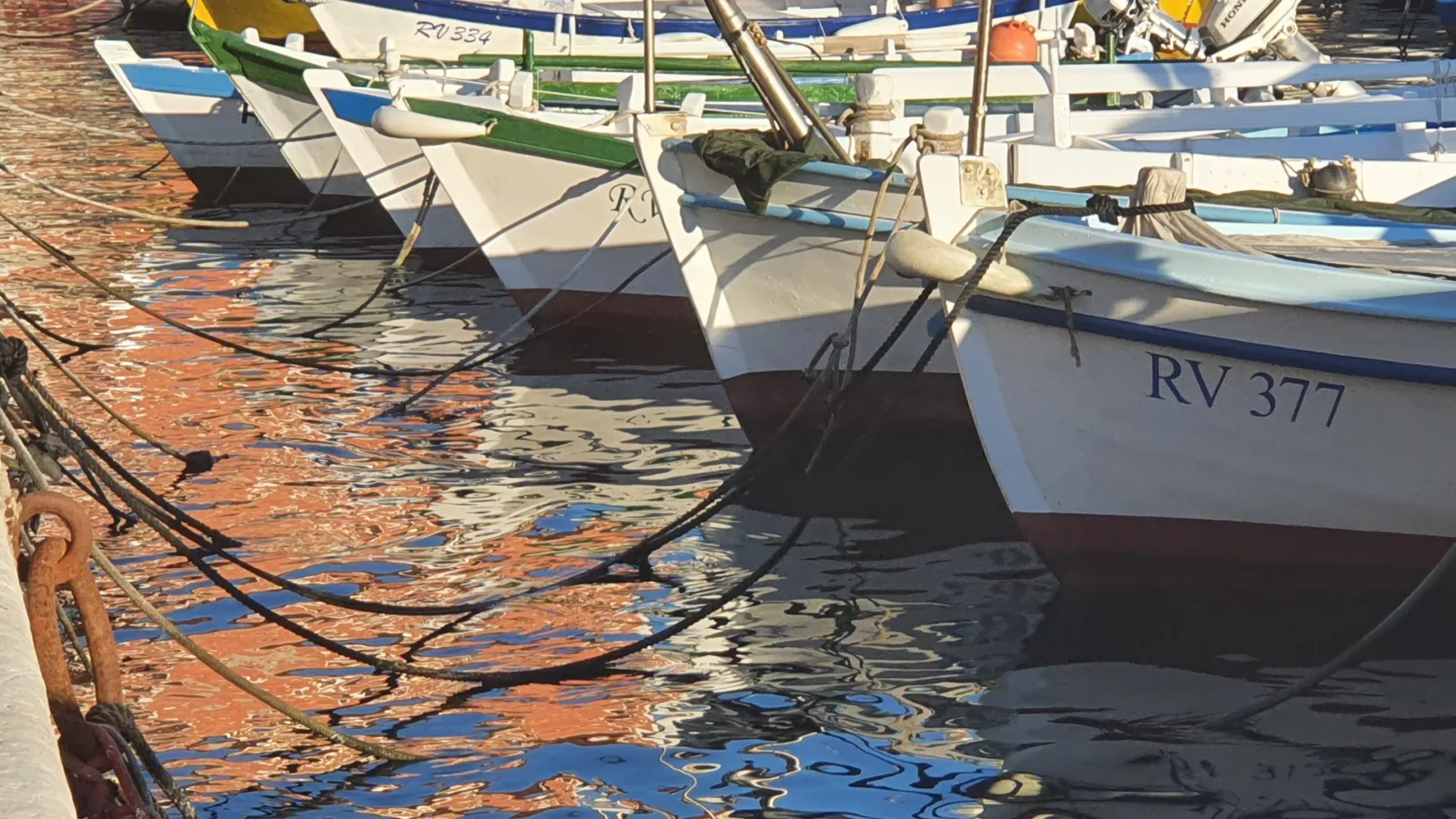
The House of Batana is one of the best places in Rovinj to understand the city beyond its postcard views. This small waterfront ecomuseum is built around the batana, the flat-bottomed wooden fishing boat that once formed part of everyday life for many Rovinj families. The visit is compact, but the story reaches much further: boatbuilding, fishing, the local Rovinj dialect, traditional songs, food and the people who continue to keep this maritime culture alive.
Last updated: September 2026.
What is the House of Batana?
The House of Batana, or Kuća o batani, is the interpretation centre of the Batana Ecomuseum. It opened to the public in 2004 inside a historic waterfront house at Obala P. Budicina 2, only a short walk from the main harbour and the Old Town.
It is not a conventional museum built around a large collection behind glass. The ecomuseum idea is broader: the boat, the people who built and used it, the local language, songs, fishing knowledge, food traditions and working waterfront all form part of the same story. That is why a visit makes more sense when you also spend time around the harbour and notice the traditional wooden boats still tied along the waterfront.
For a broader cultural overview, see Museums in Rovinj.
What exactly is a batana?
A batana is a small traditional wooden fishing boat with a flat bottom. That shape suited the shallow coastal waters around Rovinj and made the boat practical for fishing close to shore. Generations of local boatbuilders, caulkers and fishermen developed the knowledge needed to build, maintain and use these boats.
The batana matters because it connects several parts of Rovinj’s identity at once. It is a working object, but also a link to fishing families, boatbuilding skills, the Rovinj-Rovigno bilingual environment and the rhythms of a town that depended heavily on the sea.
What you see inside the museum
The permanent exhibition occupies a relatively small space, so this is not an attraction that needs half a day. Expect a focused visit with original objects, archival and modern photographs, drawings, film, slide projections and interactive displays.
One of the most useful parts explains how a batana is built. The museum documented the construction process of a traditional boat and turned it into a visual presentation that shows the work step by step. Visitors also hear bitinada, Rovinj’s traditional style of fishermen’s singing, and can learn more about the local Rovinj dialect.
More than 90% of the objects used in the original exhibition were donated by local residents, which is important to the character of the museum: this is community heritage rather than a collection assembled from outside Rovinj.
Why the UNESCO connection matters
The Batana Ecomuseum is sometimes described too loosely as a “UNESCO museum.” The more accurate explanation is that in 2016 the community project for safeguarding Rovinj-Rovigno’s living culture through the Batana Ecomuseum was selected for UNESCO’s Register of Good Safeguarding Practices under the Convention for the Safeguarding of the Intangible Cultural Heritage.
That recognition is about the way local knowledge is kept alive, not only about the museum building itself. Boatbuilding, traditional fishing knowledge, the local dialect, bitinada singing, gastronomy and community participation all form part of the safeguarding approach.
Opening hours in September 2026
For September 2026, the House of Batana currently lists opening hours of 10:00-13:00 and 18:00-21:00, with Sunday closed. Hours change by season, especially outside the summer period.
- January, February and December: 10:00-15:00; Saturday and Sunday closed
- March, April, October and November: 10:00-16:00; Sunday closed
- May and September: 10:00-13:00 and 18:00-21:00; Sunday closed
- June, July and August: 10:00-13:00 and 19:00-23:00; Sunday closed
Seasonal schedules can change, so check the official Batana Ecomuseum website shortly before your visit.
Ticket prices in 2026
The current admission prices are straightforward:
- Adults: €5
- Pupils, students and pensioners: €4
- Adult groups of more than 10: €3 per person
- School groups of more than 10: €2.50 per person
Because the museum is small, the ticket is best understood as access to a focused cultural introduction rather than a large multi-hour museum experience.
How long should you allow?
For most independent visitors, around 30-45 minutes is a realistic planning estimate for the exhibition. Allow longer if you like reading the interpretation carefully, are especially interested in wooden boatbuilding or are visiting as part of an organised programme.
The better way to experience the subject is to combine the museum with the waterfront rather than rushing through the exhibition and leaving immediately.
Continue with Rovinj Harbour to see how the maritime story fits into the modern town.
The Batana Ecomuseum is more than one building
The House of Batana is the easiest entry point, but the ecomuseum extends into several places and activities around Rovinj.
Mali Škver – the Little Shipyard
The small shipyard element keeps attention on practical boatbuilding and maintenance rather than treating the batana as something that belongs only to the past. Traditional skills are central to the whole project.
Spacio Matika
A spàcio is Rovinj’s traditional local version of a tavern or wine cellar. Spacio Matika in Švalbina Street is part of the ecomuseum and is used for seasonal cultural and gastronomic programmes, including local food, wine and bitinada singing.
The 2026 Batana website lists seasonal Spacio programmes during the warmer months, but dates and departure times can change. Treat this as something to book or verify in advance rather than simply turning up expecting a regular restaurant service.
Batana boat experiences
Seasonal programmes can include rides in traditional batana boats. These are different from the larger sightseeing cruises sold around the harbour: the point is the heritage of the boat itself and the relationship between the town and the sea.
If you want a general sightseeing or sunset cruise instead, compare options in Rovinj Boat Trips.
Best way to fit the House of Batana into a day
The museum works especially well as part of an Old Town and waterfront walk. A practical sequence is:
- Walk the harbour and look at the boats before entering the museum.
- Visit the House of Batana for 30-45 minutes.
- Continue into the historic centre and explore the waterfront lanes.
- Climb through the Old Town towards St. Euphemia if the weather is comfortable.
- Return to the harbour for lunch, coffee or an evening walk.
Use Rovinj Old Town if you want to turn the visit into a longer historic-centre route.
Is it worth visiting with children?
Yes, especially for children who like boats, fishing or hands-on displays, but keep expectations realistic. The House of Batana is compact and works better as one part of a family day than as the main activity for several hours.
Families can combine it with a harbour walk, a short Old Town route and time by the sea. Younger children may engage more with the boat imagery, sounds and multimedia than with the historical text.
Is it a good rainy-day option?
It is one of the better short indoor cultural stops in central Rovinj. On a wet day, combine it with another museum, a café or lunch rather than expecting the House of Batana alone to fill the day.
Stone surfaces around the Old Town and waterfront can be slippery when wet, so wear shoes with grip.
Accessibility and practical notes
The museum occupies two floors of a historic late-17th-century waterfront house. If step-free access or another specific accessibility requirement is important, contact the museum before your visit rather than assuming the historic building will meet every need.
The location is central and best reached on foot. Driving directly to the museum is not a useful plan because the historic waterfront and Old Town have vehicle restrictions and limited access. Park outside the pedestrian core and walk in.
There is no need to plan a special trip across town: the House of Batana sits naturally within a harbour and Old Town itinerary.
Who will get the most from the visit?
The House of Batana is especially worthwhile for visitors interested in local history, maritime culture, traditional crafts, fishing, wooden boats and the less obvious parts of Rovinj’s identity. It is also a useful stop for anyone who has already walked the Old Town and wants to understand how local people actually lived and worked around the sea.
If your priority is broad sightseeing, use Best Things to Do in Rovinj to decide how Batana fits alongside beaches, St. Euphemia, Golden Cape and boat trips.
A small museum with a bigger story
The main reason to visit is not the size of the exhibition. It is the way the Batana Ecomuseum connects one simple wooden fishing boat with the living culture of Rovinj-Rovigno. A short museum visit makes the harbour, traditional boats, local songs and old fishing streets easier to understand afterward.
That makes the House of Batana a strong cultural stop for visitors who want more than a photo of Rovinj’s skyline.